The Art of Choosing the Perfect Serving Platter

Choosing the perfect serving platter can truly elevate your dining experience. Start by understanding the types of platters available, like rectangular for charcuterie or round for appetizers. Next, consider materials—glass adds elegance while bamboo offers durability. Pay attention to size and shape, as they impact presentation. Color and design should complement your food and theme. With seasonal selections, mixing styles can also add creativity. Discover more tips for making an unforgettable presentation and impressing your guests.
Key Takeaways
- Select the appropriate shape and size of the platter based on the food type to enhance presentation and dining experience.
- Consider the material of the platter; glass or porcelain for elegance, melamine or bamboo for casual settings, and metal for maintaining heat.
- Aim for visual balance by combining larger items with smaller ones and using odd numbers for an appealing arrangement.
- Choose colors and design features that complement the food and overall theme of the occasion, enhancing aesthetic appeal.
- Ensure proper maintenance according to the platter’s material to preserve its appearance and longevity, following specific care instructions.
Understanding Different Types of Serving Platters
When you’re hosting a gathering, understanding the different types of serving platters can make all the difference in how you present your food.
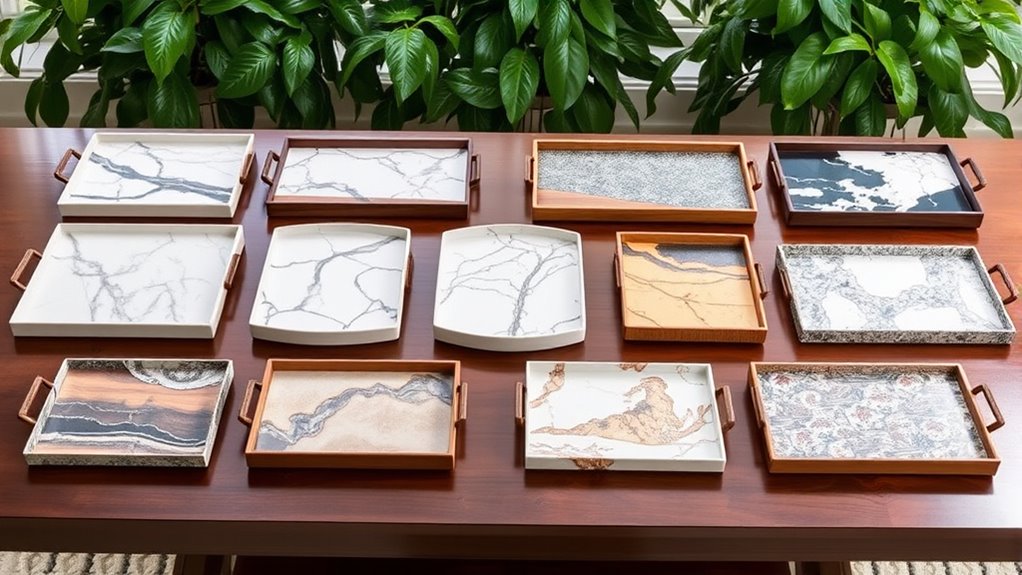
There are various shapes and sizes, each suited for different styles of serving. Rectangular platters work great for charcuterie boards, allowing you to display an array of cheeses and meats attractively.
Round platters, on the other hand, are perfect for serving appetizers like bruschetta or bite-sized snacks. If you’re featuring a main dish, consider a large, shallow platter that creates an inviting centerpiece.
Don’t overlook tiered platters, which offer height and visual interest for desserts or hors d’oeuvres. Additionally, choosing the right type of food for each platter can enhance both functionality and aesthetics.
Choosing the Right Material for Your Needs
Selecting a serving platter isn’t just about shape; the material also plays a significant role in both functionality and aesthetic appeal. You’ll want to weigh what you’re serving and where you’ll use the platter.
For casual gatherings, melamine or bamboo is lightweight and durable, making it easy to transport. If you’re aiming for elegance, glass or porcelain can add a sophisticated touch to your table.
Don’t forget about metal; it offers great insulation, keeping hot foods warm longer. Think about maintenance too; while some materials are dishwasher-safe, others may require hand washing. Integrating elegant serveware into your routine can transform everyday meals into occasions worth celebrating.
Ultimately, choose a material that complements your style while meeting your practical needs, ensuring your serving platter enhances your dining experience rather than complicating it.
The Impact of Size and Shape on Presentation
When choosing a serving platter, size and shape can considerably influence how your food is presented.
You’ll want to take into account the dimensions to guarantee your dishes fit well and look inviting.
Additionally, using the right shapes can create visual balance, making your spread even more appealing.
Platter Dimensions Matters
Choosing the right platter size and shape is crucial for enhancing your presentation. It directly impacts how your food looks and how it’s perceived by your guests. A larger platter can make a big statement, showcasing a variety of dishes beautifully, while a smaller platter can create a more intimate setting.
The shape of your platter also matters; round platters can evoke a sense of sharing and community, while rectangular ones can emphasize elegance and structure.
Keep in mind the dimensions of your table and the type of food you’re serving. You want enough space for guests to serve themselves comfortably without overcrowding. Additionally, having versatile and stylish items can elevate your dining experience, ensuring every gathering is memorable.
Taking these factors into account guarantees your presentation isn’t just appealing, but also functional.
Complementing Food Shapes
The right platter can greatly enhance the visual appeal of your dishes, especially when it comes to complementing their shapes.
Consider the shapes of your food—round dishes look stunning on circular platters, while rectangular ones might suit your sleek appetizers better. If you’re serving irregularly shaped foods, try using an organic-shaped platter to create a cohesive look.
The size of your platter also plays an essential role. A large platter can make petite food appear scattered, while a smaller one can create an intimate feel.
Think about how each dish interacts with the platter, and don’t hesitate to mix shapes and sizes for a memorable presentation. Your goal is to draw attention to the food, showcasing its beauty through thoughtful selection.
Visual Balance Techniques
To create a visually striking presentation, understanding visual balance techniques is key. When choosing a platter, consider the size and shape; both play significant roles in how your food appears. A large, flat platter can showcase intricate arrangements, while a smaller, raised one may highlight individual items, drawing the eye.
You’ll want to balance larger items with smaller ones to prevent overwhelming the space. Think about the colors and textures as well—contrasting elements can create excitement, while harmonious ones bring calm. Additionally, selecting platters made from durable materials ensures they will last through many gatherings and presentations.
Plating in odd numbers often looks more appealing, and asymmetry can yield a modern vibe. Ultimately, it’s about guiding the viewer’s eye across the platter, ensuring that all elements attract attention while feeling cohesive. Additionally, keep in mind that soft materials between plates can help prevent chips, ensuring your beautiful platters stay intact and ready for presentation.
Color and Design Considerations

When you consider a serving platter, the color and design play an essential role in enhancing your dining experience. Choosing colors that complement your food can make a dish more appetizing. Bright, vibrant colors can draw attention to the meal, while neutral shades offer a classic, elegant touch.
Don’t forget about the shape and pattern of the platter; intricate designs can add texture, while clean lines create a modern look. Think about your dining setting as well; select a design that aligns with your overall aesthetics.
Matching Platter Styles With Your Theme
A well-chosen platter can truly enhance your dining experience by aligning with your overall theme. To effectively match your platter style with your theme, consider the types of materials, colors, and shapes that complement the ambiance you want to create.
Here’s a quick reference to assist you in selecting the right platter style:
| Theme | Platter Style | Material |
|---|---|---|
| Rustic Farmhouse | Wooden | Wood |
| Elegant Formal | Porcelain | Ceramic |
| Modern Minimalist | Geometric Shapes | Glass |
| Beach Casual | Colorful Melamine | Melamine |
| Vintage Charm | Floral Patterns | Stoneware |
Choosing the right platter can elevate your presentation and delight your guests! When making your selection, consider material choices that are known for their resilience, ensuring durability for repeated use.
Practical Features to Look For
When picking the right serving platter, you should consider practical features that enhance usability.
Think about the durability of materials and how different sizes and shapes can fit your serving needs. These factors can make a big difference in both functionality and presentation. Additionally, choosing a platter that complements your overall dinnerware set can significantly elevate your hosting experience.
Material Durability Considerations
While selecting a serving platter, considering material durability is essential for guaranteeing it can withstand regular use and remain visually appealing over time.
Look for materials like melamine, which is lightweight and resistant to breaking, making it perfect for outdoor gatherings. If you prefer something more classic, stoneware offers excellent durability and can withstand high temperatures, great for hot dishes.
Glass is another option; it’s elegant and easy to clean, but be cautious as it can chip or shatter. Finally, bamboo platters add a rustic charm and are eco-friendly, though you’ll want to guarantee they’re well-treated to prevent warping.
Choosing the right material enhances both the platter’s function and its aesthetic appeal in your dining experience.
Size and Shape Options
After you’ve considered the durability of different materials, it’s time to think about size and shape options for your serving platter. The right size and shape can make a big difference in presentation and functionality. Consider the types of food you’ll serve and the occasions you’ll host.
Here’s a quick guide to help you choose:
| Shape | Best For | Size Option |
|---|---|---|
| Round | Salads or desserts | 12”-16” diameter |
| Rectangular | Meats and entrees | 14”-20” long |
| Square | Appetizers or tapas | 10”-14” sides |
Seasonal and Occasion-Based Selections
How do you choose the right serving platter for different seasons and occasions?
Start by considering the colors and themes that reflect each season. For spring and summer gatherings, opt for vibrant, floral designs or light materials, like melamine, which are great for outdoor events. In autumn, earthy tones and rustic finishes work beautifully, while winter calls for elegant, metallics or deep jewel tones to add warmth to your holiday table.
For special occasions, think about the event’s theme. A formal dinner might require sleek, white porcelain, while a casual get-together could benefit from fun, whimsical prints. Selecting the right platter can significantly enhance your dining experience, similar to how elegant dinnerware transforms a meal into a luxurious event.
Ultimately, your platter should complement your food and enhance the overall experience, ensuring every gathering feels unique and thoughtfully curated.
Mixing and Matching With Dinnerware
When you want to elevate your dining experience, mixing and matching dinnerware can add a layer of creativity and personalization to your table setting.
Don’t be afraid to combine different styles, colors, and patterns. For instance, pairing a vibrant serving platter with subtle plates can create a striking contrast. You might use textured bowls with smooth dishes to add visual interest. Consider incorporating eco-friendly food storage to complement your efforts in creating a sustainable dining experience that continues long after the meal.
Just keep a cohesive theme in mind—choose colors that complement each other, even if the patterns differ. This method allows your personality to shine through while making the dining experience much more enjoyable. Additionally, consider using airtight seals in your food storage solutions to ensure leftovers maintain their freshness and flavor.
Finally, remember to reflect on the food you’re serving; the right dinnerware can highlight your culinary creations beautifully.
Caring for and Maintaining Your Serving Platters
Once you’ve found the perfect serving platter to complement your dinnerware, caring for it properly becomes important to guarantee it lasts.
Depending on the material—ceramic, wood, or glass—different care methods apply. Always check the manufacturer’s instructions for specific guidance.
For ceramic or glass platters, hand wash them with a gentle soap and avoid abrasive sponges to keep their surface intact.
When it comes to wooden platters, wipe them down with a damp cloth, and occasionally use food-safe mineral oil to maintain their sheen.
Avoid extreme temperatures to prevent cracking or warping.
Finally, store your platters in a safe place, preferably stack them with protective padding to prevent scratches.
With a little effort, your serving platters will remain beautiful and functional for years to come.
Questions
How Do I Choose a Platter for Outdoor Events?
Choosing a platter for outdoor events is like finding the right canvas for a masterpiece. Look for sturdy, weather-resistant materials, vibrant colors, and enough space to showcase your culinary creations, making your gathering unforgettable.
Can I Use a Serving Platter in the Oven?
You can’t use a serving platter in the oven unless it’s specifically labeled as oven-safe. Always check the manufacturer’s guidelines, as non-oven-safe platters can warp, crack, or break under high temperatures. Stay safe!
What Are Some Creative Uses for Serving Platters?
You can use serving platters for displaying fruit, organizing craft supplies, serving snacks at parties, or even as a decorative centerpiece. They’re versatile and can add flair to any event or room in your home!
How Many Serving Platters Should I Own?
You should aim for at least three serving platters: a large one for main dishes, a medium one for appetizers, and a small one for desserts. This variety will cover most of your entertaining needs perfectly.
Where Can I Find Unique, Artisan Serving Platters?
You can find unique, artisan serving platters at local craft fairs, artisan markets, or online marketplaces like Etsy. Don’t forget to check out specialty kitchen stores or boutiques for exclusive designs.