How to Organize Your Pantry Like a Pro

To organize your pantry like a pro, start by evaluating what you’ve got and decluttering expired or duplicate items. Categorize your ingredients for easy access and choose clear bins or jars for storage. Optimize vertical space with stackable containers and labels for everything. Don’t forget to maintain your organized pantry by checking expiration dates regularly and using older items first. By following these steps, you’ll create a functional pantry that meets your needs. There’s plenty more to explore!
Key Takeaways
- Assess your pantry by checking expiration dates, categorizing items, and reviewing accessibility for efficient organization.
- Declutter by removing expired, duplicate, or unwanted items, ensuring only necessary ingredients are stored.
- Choose clear, airtight storage containers, and utilize stackable bins to optimize vertical space and visibility.
- Implement clear labeling, including purchase dates and expiration dates, for easy identification and inventory management.
- Regularly maintain your pantry by checking expiration dates, reorganizing items, and practicing the FIFO method for freshness.
Assess Your Current Pantry Situation
Before diving into organizing your pantry, it’s essential to assess your current situation. Take a moment to open those doors and see what you’re working with. Look closely at the items inside – are they expired, damaged, or simply taking up space?
Consider how often you use each product. You should also evaluate the layout and accessibility; is everything easy to reach? Jot down any patterns you notice. Do some categories need more space than others?
Think about your cooking and snacking habits, as they’ll guide your organization. By knowing exactly what you’ve got, you can create a more efficient and personalized pantry. This assessment sets the foundation for a successful pantry makeover!
Declutter and Purge Unwanted Items
As you prepare to organize your pantry, it’s essential to declutter and purge unwanted items that have overstayed their welcome. Start by reviewing everything you have. Toss out anything that doesn’t belong or that you know you won’t use. This step clears space for what you really need.
Consider removing items that are:
- Expired or stale
- Duplicates you don’t need
- Containers with broken seals
- Foods you don’t enjoy
- Items that don’t align with your current dietary needs
Once you’ve cleared the clutter, you’ll feel lighter and more focused. This process not only improves the look of your pantry but also makes it easier to find what you use regularly.
Clearing the clutter not only enhances your pantry’s appearance but also simplifies finding your go-to items.
Happy purging!
Categorize Your Ingredients
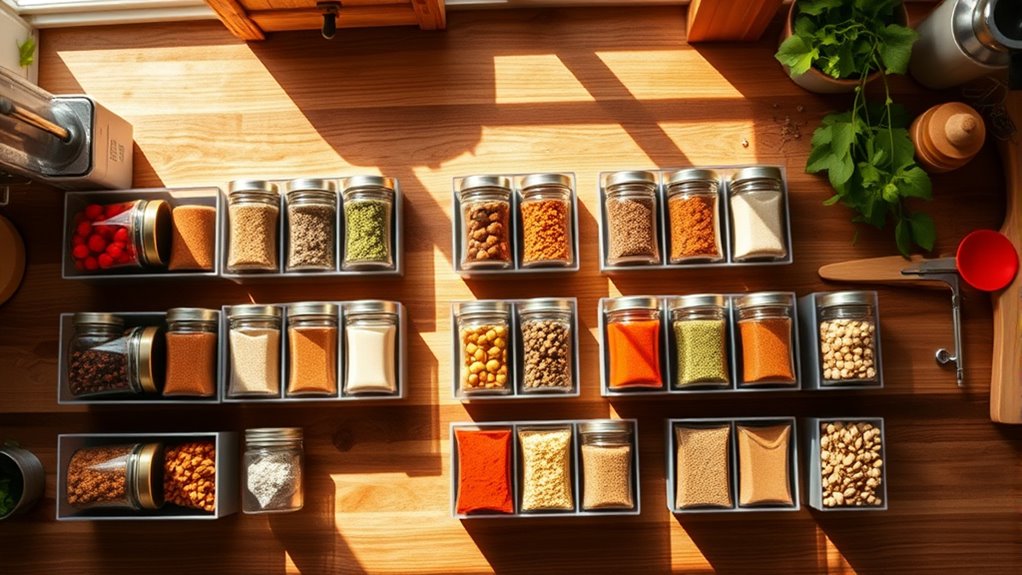
Once you’ve purged your pantry of unwanted items, the next step is to categorize your ingredients for easy access and organization. Start by grouping similar items together; for instance, keep canned goods, grains, spices, and baking supplies in separate sections. This not only streamlines your cooking process but also helps you quickly find what you need. Additionally, employing clear storage containers can enhance visibility and accessibility for your ingredients. You might use smaller bins or labels to differentiate between groups, making it even easier to maintain organization. Additionally, incorporating a first-in, first-out method ensures that you are using older items before newer ones, preventing food waste. Don’t forget to take into account frequency of use; keep everyday items at eye level and less frequently used products higher up.
Choose the Right Storage Solutions
Choosing the right storage solutions can transform your pantry from a chaotic jumble to a well-organized space.
Transform your pantry into a well-organized space with the right storage solutions.
Start by evaluating your needs and selecting containers that fit your ingredients and lifestyle. Here are some options to contemplate:
- Clear plastic bins for easy visibility
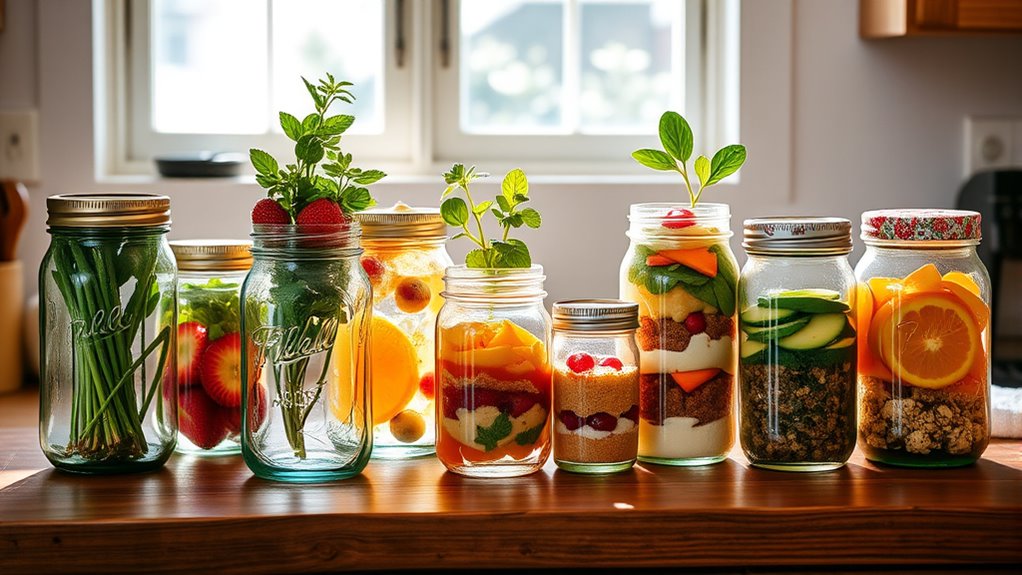
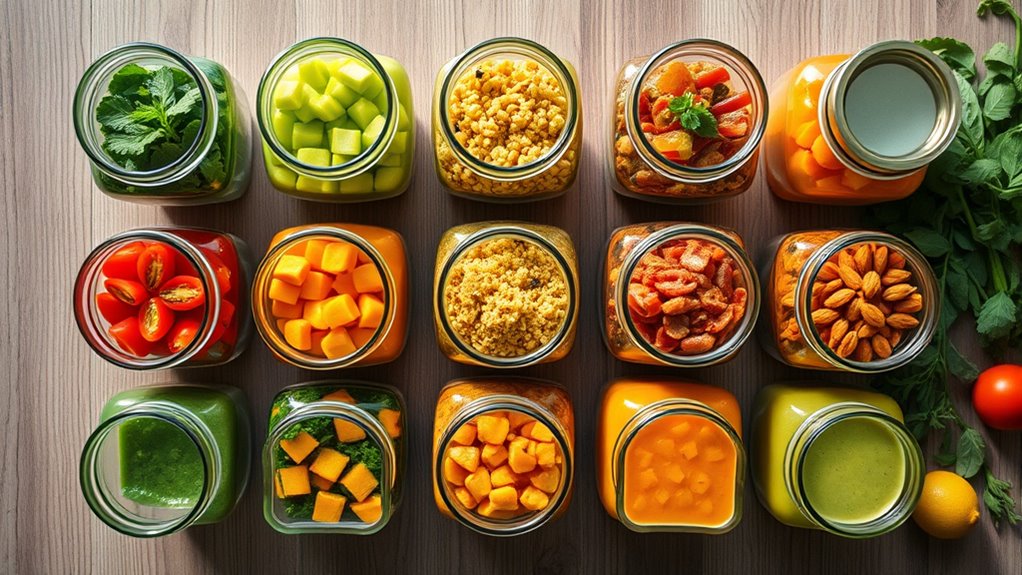
- Airtight glass jars to keep dry goods fresh
- Stackable bins to maximize shelf space
- Lazy Susans for quick access to spices and oils
- Labels for clear identification
Incorporating hidden storage hacks into your pantry design can greatly enhance both functionality and style. When you pick the right solutions, you’ll not only save time during meal prep but also enjoy a more aesthetically pleasing pantry. Incorporating stackable containers into your design can greatly enhance both functionality and style.
Optimize Vertical Space

To make the most of your pantry’s vertical space, consider investing in stackable containers and adjustable shelving units. You can also maximize storage by hanging baskets for easy access to smaller items. Using these strategies will help you create a more organized and efficient pantry. Additionally, incorporating innovative kitchen tools like airtight containers can keep your ingredients fresh and easily accessible. Utilizing smart drawer organizers will further enhance your pantry’s efficiency by keeping similar items together and easily reachable.
Use Stackable Containers
Using stackable containers can dramatically enhance your pantry’s organization by maximizing vertical space. They not only provide an efficient way to store food items, but they also keep your pantry looking tidy.
When choosing stackable containers, consider the following tips:
- Find the right sizes: Pick containers that fit snugly together while allowing for easy access.
- Label everything: Use clear labels to quickly identify what’s inside each container.
- Opt for transparent materials: This helps you see contents at a glance, minimizing searches.
- Choose airtight options: Keep your food fresh and safe from pests, as airtight containers are effective at preserving freshness.
- Utilize different shapes: Mixing rectangular and square containers can create a more appealing arrangement.
Install Shelving Units
While you might’ve limited floor space in your pantry, installing shelving units can considerably improve organization and accessibility. By maximizing vertical space, you can store more items without cluttering the floor.
Choose adjustable shelving units to customize the height between shelves based on your needs. This flexibility makes it easier to accommodate various pantry goods, from canned foods to larger bulk items. Additionally, efficiency in organization is critical in any kitchen setup, as it allows for a smoother cooking experience.
Consider using open shelves for frequently accessed items, while reserving the higher levels for things you don’t use daily. Label each shelf to categorize items, ensuring everything’s in its place. Additionally, utilizing often-overlooked areas like the backs of cabinet doors can further enhance your storage capacity.
When installed correctly, shelving units not only enhance the look of your pantry but also streamline your cooking and meal prep by making ingredients easy to find.
Hang Baskets Effectively
If you’re looking to make the most of your pantry’s vertical space, hanging baskets can be a game-changer.
They not only add visual interest but also keep your items organized and accessible.
Here are some effective tips for hanging baskets:
- Choose light materials: Opt for baskets that are lightweight to avoid putting too much strain on your shelves.
- Utilize wall space: Invest in wall-mounted hooks or racks to hang baskets efficiently.
- Sort by category: Group similar items, such as snacks or produce, to make everything easy to find.
- Mix sizes: Use a combination of small and large baskets to fit different items without overcrowding.
- Maintain accessibility: Hang baskets at a height that allows for easy reach, ensuring convenience in your pantry.
Label Everything for Easy Access
To guarantee you can quickly grab what you need, labeling everything in your pantry is essential. It turns chaos into order, making meal prep a breeze.
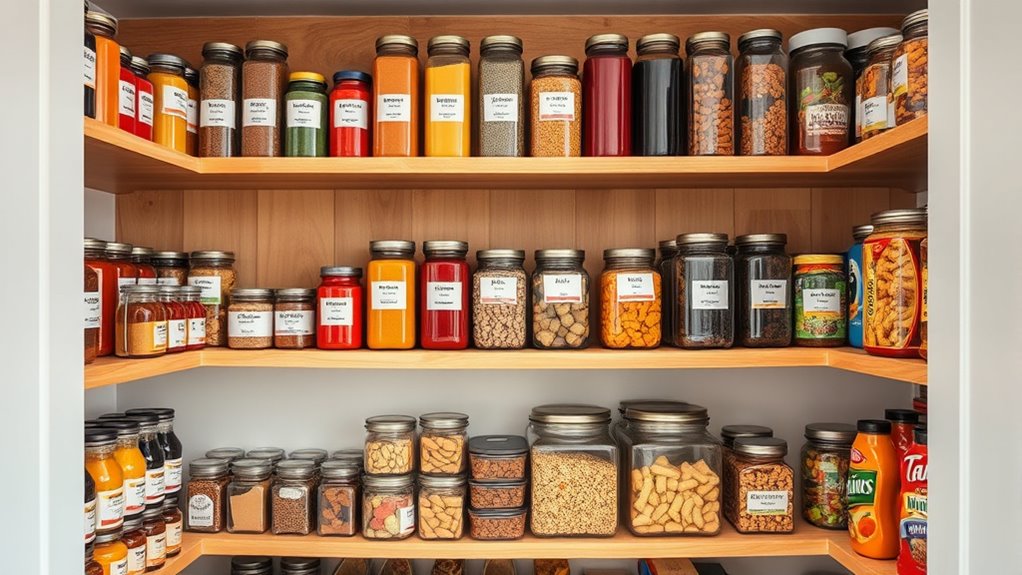
Start with your containers: whether jars, boxes, or bins, clear labels will help you find your staples at a glance. Use bold, legible lettering to make reading easy, even without good lighting.
Begin by labeling your containers clearly; bold, readable letters ensure you can easily spot your kitchen essentials, even in dim light.
Consider organizing labels by categories, like grains, snacks, and spices, so you can locate items faster. Don’t forget to use labels on the shelves too; these can guide you when restocking. You can even add expiration dates to keep track of freshness.
Ultimately, well-placed and clear labels transform your pantry into a user-friendly space that saves you time and effort in the kitchen.
Maintain Your Organized Pantry
Once you’ve organized your pantry, keeping it that way requires a bit of regular maintenance.
To guarantee your hard work doesn’t go to waste, make these habits part of your routine:
- Check expiration dates regularly and toss anything expired.
- Reorganize items if things become messy or misplaced.
- Wipe down shelves monthly to prevent spills or crumbs from building up.
- Rotate items by using older products first, keeping inventory fresh.
- Reassess storage solutions every few months to see if improvements can be made.
Implement a System for New Purchases
To keep your pantry organized, you need a system for new purchases.
Start by labeling items with their purchase dates, using the FIFO method to guarantee older items get used first.
Regular inventory checks will help you stay on top of what you have and what you need. Additionally, refrigerating or freezing leftovers promptly can help ensure that you maintain food safety and reduce waste.
Purchase Date Labeling
While it may seem tedious, implementing a purchase date labeling system can greatly enhance your pantry organization. By knowing when you bought each item, you can keep track of your supplies more efficiently and reduce waste.
Here’s how to set it up:
- Use colorful labels to distinguish categories.
- Write the purchase date clearly on each label.
- Place labels on the top of jars or the front of boxes.
- Reassess and replace labels when restocking.
- Consider using waterproof labels for spills.
With this system, you’ll always be aware of what needs to be used first, ensuring nothing gets lost at the back of your pantry.
A simple labeling method can make all the difference!
FIFO Method Implementation
Implementing the FIFO (First In, First Out) method in your pantry can greatly reduce food waste and guarantee the freshness of your ingredients. To get started, always place new items behind older ones. This simple practice assures you use up the older stock first.
Here’s a quick reference table to help you visualize the process:
| New Purchases | Old Stock |
|---|---|
| Place at the back | Keep at the front |
| Check expiration | Use before new |
| Rotate regularly | Maintain freshness |
Regular Inventory Checks
Establishing regular inventory checks not only keeps your pantry organized but also guarantees you’re aware of what you have and what you need.
By implementing a system for new purchases, you can streamline your shopping and reduce waste. Here’s how to get started:
- Choose a consistent day each month for your inventory.
- Create a simple spreadsheet or list to track your items.
- Check expiration dates and highlight items that need to be used soon.
- Note any missing essentials so you can restock before your next shopping trip.
- Consider keeping a running grocery list near the pantry for spontaneous purchases.
With these steps, you’ll find managing your pantry becomes a breeze, giving you more time and less stress in the kitchen.
Questions
How Often Should I Reorganize My Pantry?
Most people recommend reorganizing your pantry every six months. By doing so, you’ll not only maintain order, but also spot expired items faster, making meal prep easier and grocery shopping more efficient.
What Should I Do With Expired Items?
You should discard expired items immediately. Check labels regularly and be thorough in your purge. If it’s stale or past its date, it’s best to toss it out and keep your pantry fresh.
Are There Eco-Friendly Storage Options Available?
You won’t believe the eco-friendly storage options available! From glass jars to bamboo containers, you can find sustainable choices that not only keep items fresh but also reduce waste, making your pantry both stylish and green.
Can I Store Non-Food Items in My Pantry?
Yes, you can store non-food items in your pantry. Just make sure they’re clearly labeled and placed away from food products to avoid contamination. Organizing them well keeps your pantry functional and clutter-free.
How Can I Prevent Pests in My Pantry?
You remember your friend Lisa’s battle with pantry moths. To prevent pests, seal food in airtight containers, regularly clean shelves, and check for expired items. Keeping the space tidy reduces their chances of invading.