Kitchen Labeling Tips for Neat Storage

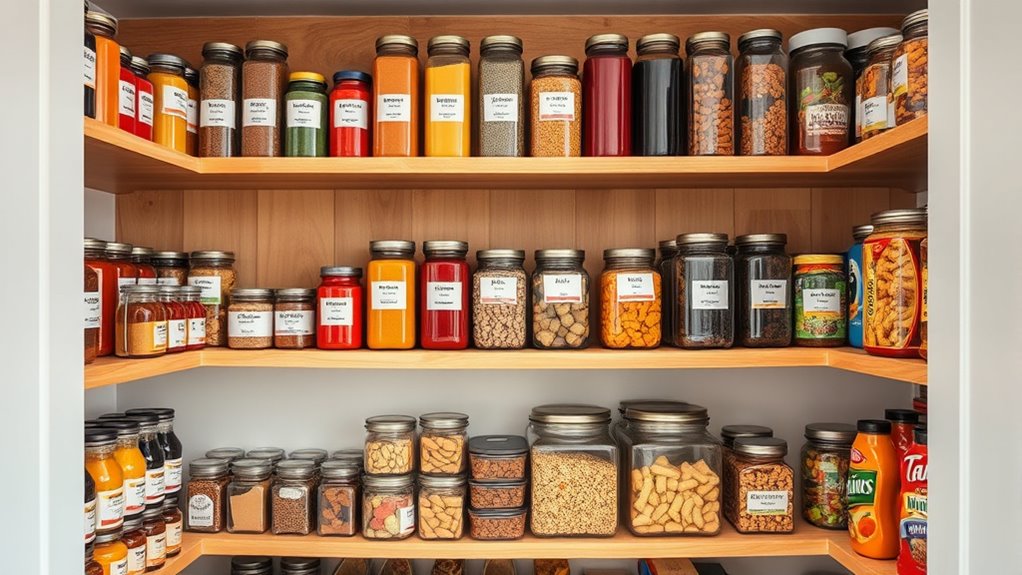
For neat kitchen storage, choose easy-to-read labels made from materials like chalkboard or vinyl. Categorize your ingredients into groups like spices, baking supplies, and snacks to improve organization. Use clear, sans-serif fonts for visibility and include expiration dates on perishables for safety. Implement a color-coding system to enhance the visual appeal and consistency. Remember, maintaining uniformity in your labeling system is essential. Discover more handy tips to transform your kitchen into a well-organized space.
Key Takeaways
- Choose clear, readable labels using sans-serif fonts for easy identification and a streamlined kitchen look.
- Organize ingredients into categories like spices, grains, and baking supplies for simplified access and meal prep.
- Utilize color-coded labels for different categories to enhance visual appeal and quick identification.
- Include expiration dates on perishables to prioritize food safety and minimize food waste.
- Maintain consistency in label design, including materials and colors, for an organized and inviting kitchen atmosphere.
Choose the Right Labels for Your Storage Solutions
When it comes to organizing your kitchen, choosing the right labels for your storage solutions can make all the difference. You’ll want labels that are easy to read and fit the aesthetic of your kitchen.
Consider label materials like chalkboard, vinyl, or clear adhesive. Think about size; guarantee they’re large enough to see from a distance but not so big that they overwhelm your containers.
Choose label materials like chalkboard or vinyl, ensuring they’re visible yet not overpowering for your containers.
Use a consistent font and color scheme to maintain a uniform look. If you’re keen on aesthetics, decorative fonts can elevate your kitchen’s charm.
Don’t forget to label your containers clearly—include both the ingredient name and the date if you’re storing perishables. This way, everything’s easily identifiable and looks great!
Categorize Your Ingredients
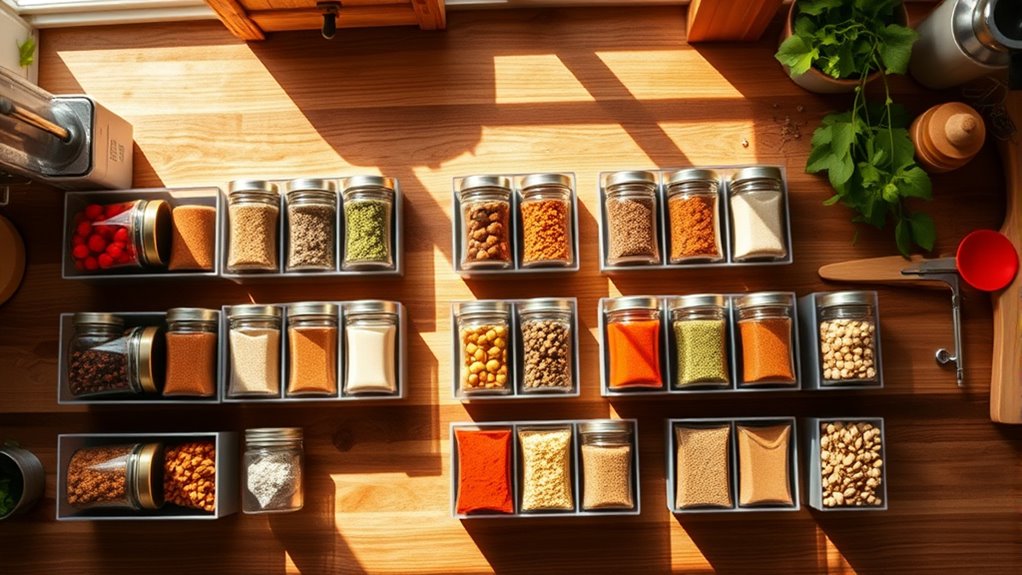
To make your kitchen more functional and organized, you’ll find it helpful to categorize your ingredients. Start by grouping them into categories like spices, grains, baking supplies, and snacks. This approach not only simplifies your cooking process but also makes locating items a breeze. Utilizing tiered racks for your spices can further enhance accessibility and organization.
Once you’ve defined your categories, you can designate specific storage areas for each group, ensuring everything has its place.
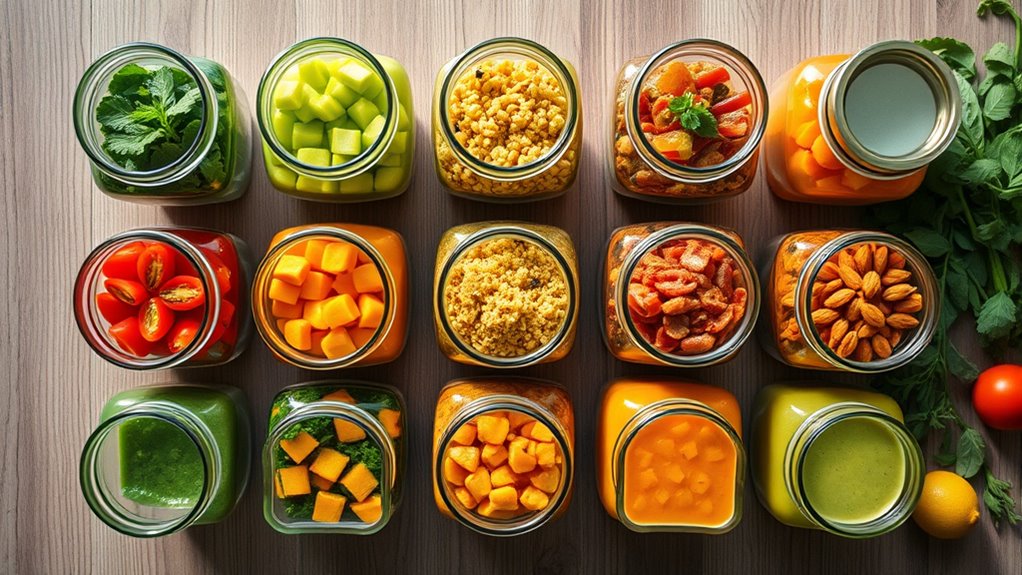
As you fill your containers, consider using uniform jars or bins to create a streamlined look. Consistency in shape and size can enhance your kitchen’s aesthetics while maximizing storage space. Additionally, implementing a color-coded system for labeling can further improve your kitchen organization and make it visually appealing.
Use Clear and Readable Fonts
Using clear and readable fonts is essential for effective kitchen labeling. When you’re organizing your pantry or fridge, the right font style can make a world of difference.
Opt for sans-serif fonts like Arial or Helvetica, which are easy to read at a glance. Avoid overly decorative fonts that can confuse you, especially when you’re in a hurry. Make sure the font size is large enough to be legible from a distance, and choose high-contrast colors for better visibility.
You want your labels to be functional and not just stylish. Consistency in font usage across all labels gives your kitchen a streamlined look, making it easier to find what you need without any hassle. Clarity really is key!
Include Expiration Dates for Perishables
Including expiration dates for perishables is essential, especially since food safety is a top priority in any kitchen. By adding these dates to your labels, you’re ensuring that you’re aware of when food items need to be used or tossed. This practice helps reduce food waste and keeps your meals safe and healthy.
When labeling, include not just the date itself but also a reminder of what to look for, like changes in color or smell. For items like dairy and meats, pay special attention, as they spoil quickly.
Regularly check your labeled perishables and adjust as necessary. You’ll find that you feel more organized and confident in the freshness of your food, making meal prep much easier.
Implement Color-Coding Systems

Using a color-coding system in your kitchen can make organizing ingredients a breeze.
You’ll want to choose a clear color theme and assign meaningful colors to different items for easy identification.
Just make sure you stick to consistent labels to keep everything in order.
Choose Color Themes
One great way to organize your kitchen is by implementing a color-coding system. Choosing specific colors for your labels can make finding items a breeze.
You might want to pick a palette that reflects the overall décor of your kitchen or just your favorite colors. For example, using warm tones like red and orange can create a cozy feel, while cool colors like blue and green can promote a calming atmosphere.
Think about what colors resonate with you and how they can enhance your kitchen space. It’s not just about aesthetics; when everything’s color-coded, you’ll save time searching for ingredients and utensils.
Assign Meaningful Colors
Color can transform your kitchen organization, especially when you assign meaningful shades to your labels. By utilizing a color-coding system, you can create an inviting and organized space that not only looks great but also simplifies your cooking experience.
Here’s how to get started:
- Red for Spices: Red invokes excitement, helping you quickly find those essential heat-infusing spices.
- Green for Produce: Fresh greens signal health and freshness, making it easy to grab fruits and veggies.
- Blue for Snacks: Blue creates a calming vibe, perfect for your go-to treats, keeping them organized and easy to reach.
Implementing these colors not only enhances organization but also brings energy and joy into your kitchen.
Happy labeling!
Use Consistent Labels
Consistency is key when it comes to labeling in your kitchen. Using uniform labels not only enhances organization but also makes finding items simpler. A color-coding system can be incredibly effective here, allowing you to identify categories at a glance.
Here’s a quick reference table that can help you establish a consistent labeling system:
| Color | Category | Example |
|---|---|---|
| Red | Spices | Garlic Powder |
| Blue | Grains | Quinoa |
| Green | Vegetables | Dried Oregano |
Labeling for Bulk Items vs. Small Containers
While labeling both bulk items and small containers might seem straightforward, there are key differences to keep in mind for effective organization.
Bulk items, like flour or rice, require clear, prominent labels since you might need to access them frequently. Additionally, using clear containers for visibility can further enhance the identification of these essential ingredients. In contrast, small containers, such as spice jars or snack packs, benefit from more detailed labels, as you want to quickly differentiate between similar items.
Bulk items need clear labels for easy access, while small containers require detailed labels for quick differentiation.
Here’s what to evaluate:
- Size of the label: Make sure it’s easy to read from a distance.
- Content description: Use descriptive names for clarity, like “Organic Brown Rice”.
- Date of purchase: Helps track freshness, especially with bulk items.
Additionally, consider utilizing vertical space efficiently for storing labeled items, as it can significantly enhance organization in small kitchens. Balancing clarity and detail can make all the difference!
Consistency Is Key in Your Labeling System
When it comes to your kitchen labeling system, consistency can make all the difference.
By choosing a specific label format and using clear language, you’ll create an easier navigation experience.
Establishing a color code can also help in quickly identifying items, streamlining your kitchen tasks. Incorporating innovative storage options can further enhance the organization of your labeled items, ensuring they are easily accessible and visually appealing.
Choose a Label Format
Choosing a label format for your kitchen is essential, as it lays the groundwork for an effective labeling system.
By picking a consistent style, your kitchen will look organized and feel inviting. You’ll find cooking becomes more enjoyable when everything’s easy to find.
Here are three label formats you might consider:
- Color-coded labels: Use different colors for various categories, like grains, spices, or snacks, to add a personal touch and make items pop.
- Bold fonts: Choose clear, bold fonts to guarantee visibility; it’ll help you quickly find what you need without squinting.
- Fun shapes: Experiment with unique shapes that reflect your personality, making your kitchen feel warm and welcoming.
With a consistent label format, you’re one step closer to a neat and efficient kitchen!
Use Clear Language
To keep your kitchen organized, using clear language on your labels is essential; it helps everyone, including you, quickly understand where everything belongs. When labeling, stick to simple, direct terms that everyone in your household can recognize. This clarity reduces confusion and speeds up meal prep.
Here’s a quick reference table for inspiration:
| Clear Label | Alternative Label | Confusing Label |
|---|---|---|
| Pasta | Dried Noodles | Long Cooking Stuff |
| Sugar | Granulated Sugar | Sweet White Powder |
| Spices | Seasonings | Flavor Enhancers |
| Canned Tomatoes | Tomato Sauce | Tinned Red Food |
Establish Color Code
Establishing a color code for your kitchen labels can make organization a breeze, as it allows you to quickly identify categories at a glance.
When everything’s in its rightful place, you’ll feel calmer and more in control during meal prep. Here’s how to get started with a simple color system:
- Red for spices – The vibrant color can ignite your culinary passion.
- Green for pantry items – Freshness and energy are essential for a balanced kitchen.
- Blue for baking supplies – This color can evoke a sense of calm and creativity when you’re whipping up treats.
Questions
What Materials Are Best for Durable Kitchen Labels?
“Don’t judge a book by its cover.” For durable kitchen labels, use materials like vinyl, waterproof paper, or magnetic sheets. These resist moisture and wear, ensuring your labels last while keeping your kitchen organized and stylish.
How Can I Remove Old Labels Without Damaging Containers?
To remove old labels without damaging containers, use heat from a hairdryer to soften the adhesive, then gently peel off the label. You can also try rubbing alcohol or vinegar to dissolve any remaining residue.
Are There Eco-Friendly Label Options Available?
You’re in luck! There’re plenty of eco-friendly label options out there, like biodegradable paper or plant-based adhesives. You can also try reusable chalkboard labels—perfect for a sustainable kitchen that’s both stylish and functional!
Can Labels Be Used on Non-Food Items in the Kitchen?
You can use labels on non-food items in your kitchen, like containers, cleaning supplies, or utensils. It’ll help you stay organized and quickly find what you need, making your kitchen more efficient.
How Do I Create Custom Labels Using a Printer?
To create custom labels using a printer, select a design software, choose label dimensions, design your labels, then print on adhesive paper. Cut them out, and you’ll have personalized labels ready for use!