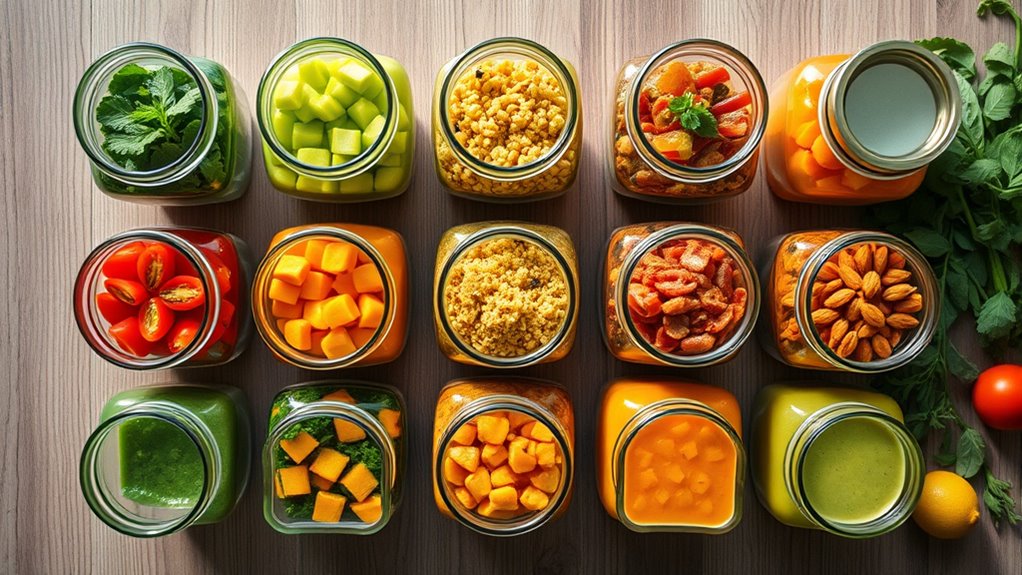
The Best Containers for Food Freshness

To keep your food fresh, opt for glass storage containers as they’re durable and don’t absorb odors. Plastic food bins with airtight seals also work well, while silicone bags offer a reusable option. If you’re looking to maximize freshness, vacuum-sealed containers prevent spoilage by reducing air exposure. Stainless steel is eco-friendly and lightweight, making it another excellent choice. Want to know more about specialized options and best practices? Keep exploring for all the details!
Key Takeaways
- Glass storage containers enhance food freshness and are durable, making them suitable for various storage needs.
- Plastic food storage bins with airtight seals effectively preserve leftovers while being available in multiple sizes.
- Vacuum sealed containers minimize air exposure, preventing spoilage and ensuring longer food freshness.
- Silicone food bags are reusable and leak-proof, providing an eco-friendly option for storing both solids and liquids.
- Airtight food storage canisters are essential for preventing moisture and air from spoiling dry goods like grains and snacks.
Glass Storage Containers
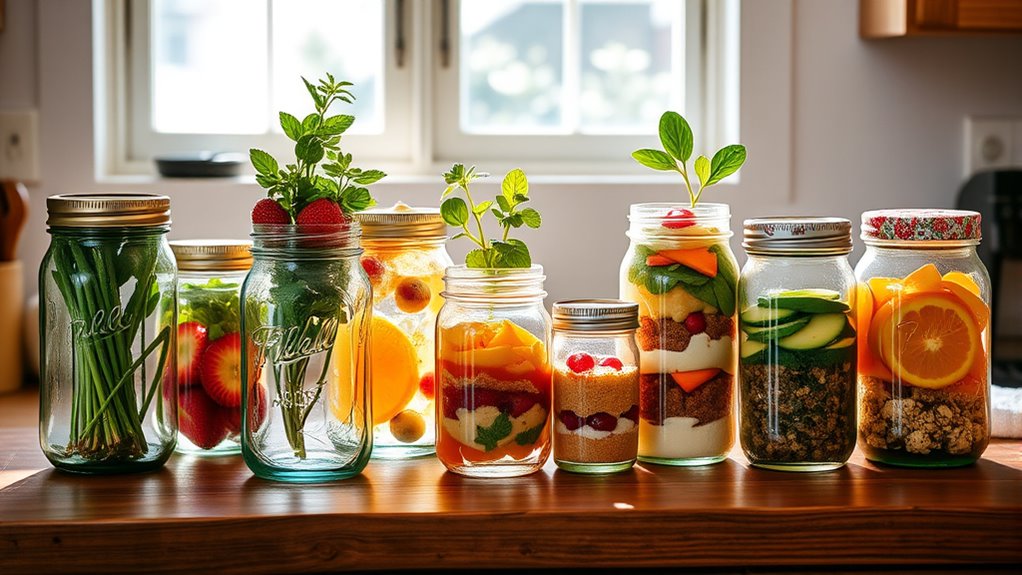
When it comes to keeping your food fresh, glass storage containers really stand out. Unlike plastic, they don’t absorb odors or stains, ensuring your meals taste just as they should.
You’ll appreciate their durability and heat resistance, making them safe for both the microwave and oven. Plus, glass containers are often dishwasher-friendly, so cleanup’s a breeze.
You’ll also find that they come in a variety of sizes and shapes, allowing you to efficiently store everything from leftovers to meal prep ingredients. In addition, different materials such as glass provide optimal food preservation due to their non-porous nature.
Their airtight lids create a perfect seal, keeping air and moisture out. Investing in glass containers not only enhances the freshness of your food but also gives you a more eco-friendly option for your kitchen. Additionally, they are a great choice due to their sustainable alternatives that minimize your ecological footprint.
You won’t regret making the switch!
Plastic Food Storage Bins
When it comes to keeping your food fresh, plastic food storage bins offer a practical solution.
You’ll appreciate their durability, safety features, and various sizes that fit your storage needs.
Plus, with airtight seals, you can guarantee your leftovers stay as fresh as possible.
Material Durability and Safety
Choosing the right plastic food storage bins is essential for maintaining food freshness, and their durability and safety play a key role in that. When selecting bins, consider materials that are both BPA-free and resilient enough to withstand daily use. High-quality plastics won’t crack under pressure, ensuring your food stays intact and safe.
Here’s a quick comparison of common plastic materials:
| Material | Durability & Safety |
|---|---|
| Polyethylene | Flexible but less durable |
| Polypropylene | Strong and heat-resistant |
| PVC | Rigid but less safe |
| PET | Lightweight and recyclable |
| HDPE | Very durable and safe |
Airtight Seal Mechanisms
A reliable airtight seal is essential for preserving food freshness, as it prevents moisture and air from spoiling your meals.
When choosing plastic food storage bins, look for designs that feature effective sealing mechanisms. Lids with silicone gaskets or clamps can create a tight closure, guaranteeing your food stays fresh longer. Snap-on lids or locking mechanisms add an extra layer of protection against leaks and spills.
It’s also important to test the seal during purchase—open and close the containers to confirm they fit securely.
Size and Organization Options
Finding the right size and organization options for plastic food storage bins can make all the difference in keeping your kitchen orderly and your food fresh. Start by evaluating the space you have; bins should fit your shelves or cabinets without wasting valuable real estate.
Choose various sizes—small bins for snacks and larger ones for bulk items like grains or pasta. Stackable options maximize vertical space, while clear bins help you quickly spot contents. Consider labeled bins for easy access, especially in busy kitchens.
Don’t forget about modular sets that allow you to customize based on your needs. With the right sizes and organization methods, you’ll be able to streamline your food storage and make meal prep a breeze!
Silicone Food Bags
When it comes to keeping food fresh, silicone food bags are a game changer. Unlike plastic bags, these eco-friendly alternatives are reusable and durable, making them an excellent choice for your kitchen.
They’re not only free from harmful chemicals but also heat resistant, so you can use them in the microwave or sous vide cooking. Their flexible design means you can easily store liquids and solids alike without worrying about leaks. To ensure safety, it’s crucial to refrigerate leftovers promptly after use, preventing bacterial growth.
Plus, silicone bags come in various sizes, ensuring you have the right fit for everything from snacks to meal prep. You’ll find clean-up a breeze, as they’re dishwasher safe. Additionally, unlike traditional storage options like glass jars, silicone bags offer greater flexibility for both storage and transportation.
Vacuum Sealed Containers

Silicone food bags offer great versatility, but for even longer-lasting freshness, vacuum sealed containers elevate food storage to the next level. With these containers, you can remarkably reduce air exposure, which helps prevent freezer burn and spoilage. They’re perfect for marinating meats or storing grains, locking in flavor and nutrients.
Plus, vacuum sealing creates a compact storage solution, maximizing your fridge or freezer space.
Many users appreciate the convenience of portioning meals ahead of time, making weeknight dinners effortless. You won’t need to worry about leftovers going bad when they’re airtight.
Just remember to follow the manufacturer’s instructions for sealing, and you’ll enjoy fresher food for longer. Say goodbye to wasted ingredients and hello to better meal prep!
Stainless Steel Options
While many food storage solutions focus on plastic or glass, stainless steel options provide an eco-friendly alternative that stands out in both durability and aesthetics.
They’re not just stylish; they also keep your food fresh, thanks to their airtight seals and resistance to stains and odors. Regularly cleaning your stainless steel containers can further enhance their performance and longevity, as recommended in best practices for maintaining appliances.
Here are some reasons to choose stainless steel containers:
- Durability: They withstand daily wear and tear.
- Non-toxic: Free from harmful chemicals found in plastics.
- Easy to clean: They’re dishwasher safe, saving you time.
- Versatile: Great for meal prep, leftovers, and snacks.
- Lightweight: Easy to carry while being sturdy.
Investing in stainless steel means you’re prioritizing both your health and the environment while maintaining food freshness. Additionally, unlike some plastic options, stainless steel containers do not contain harmful chemicals like BPA, ensuring safer food storage for your family.
Amber Glass Jars

Amber glass jars are an excellent choice for preserving food freshness, thanks to their unique ability to protect contents from harmful UV rays. These jars not only enhance shelf life but also maintain flavor integrity. They’re perfect for items like oils, herbs, and homemade sauces. Maintaining proper seasoning on your food items can further enhance their longevity and flavor.
Here’s a quick comparison of key features:
| Feature | Benefit | Best For |
|---|---|---|
| UV Protection | Preserves nutrients and flavors | Oils and spices |
| Non-reactive | Doesn’t interact with food | Sauces and pantry items |
| Reusability | Eco-friendly and cost-effective | Long-term storage |
Using amber glass jars can certainly elevate your food storage game, helping you enjoy fresher ingredients and savings in the long run. Consider selecting durable containers that complement your kitchen’s decor to enhance both functionality and style. So, consider adding them to your kitchen collection!
Ziplock Bags and Alternatives
When it comes to keeping your food fresh, Ziplock bags are a go-to for many people due to their convenience and versatility. However, if you’re looking for more eco-friendly options, there are several alternatives that can also maintain freshness. Maintaining a clean and organized fridge is essential for preventing spoilage, which can help you store food more effectively.
Let’s explore the benefits of Ziplock bags, some sustainable substitutes, and best practices for storage to keep your food at its best. Incorporating clear storage containers can enhance accessibility in your fridge, allowing you to easily see and organize your food items.
Benefits of Ziplock Bags
Although there are many options for food storage, Ziplock bags stand out for their convenience and versatility.
They’re perfect for various uses, making them a go-to choice in many kitchens. Here are some benefits you’ll enjoy when using Ziplock bags:
- Space-saving: They’re flexible and can be flattened, saving valuable storage space.
- Leak-proof: You can store liquids without worrying about messes.
- Easy to label: Write directly on the bag or use a label for easy identification.
- Reusable: With proper cleaning, you can use them multiple times, making them cost-effective.
- Variety of sizes: From snacks to meal prep, there’s a size for every need.
With Ziplock bags, organizing and preserving your food becomes quick and effortless!
Eco-Friendly Alternatives Available
If you’re looking to make more eco-conscious choices in your kitchen, there are several alternatives to traditional Ziplock bags that maintain food freshness while being kinder to the planet. You might consider using reusable silicone bags, which are durable and easy to clean. Another option is beeswax wraps, perfect for covering bowls or wrapping sandwiches.
Here’s a quick comparison of some eco-friendly options:
| Alternative | Key Features |
|---|---|
| Reusable Silicone Bags | Dishwasher safe, flexible, long-lasting |
| Beeswax Wraps | Compostable, reusable, customizable sizes |
| Glass Containers | Microwave safe, airtight, reusable |
| Stainless Steel Containers | Durable, non-toxic, recyclable |
Switching to these alternatives not only supports sustainability but also keeps your food fresh!
Best Practices for Storage
To maximize food freshness, it’s essential to adopt best practices for storage, whether you’re using Ziplock bags or eco-friendly alternatives.
Here are some tips to help you preserve your food better:
- Use the right size: Choose bags that fit your portion sizes to minimize air exposure.
- Remove excess air: Squeeze out as much air as possible before sealing to prevent freezer burn.
- Label and date: Clearly mark your bags with contents and dates to keep track of freshness.
- Keep it cool: Store food at the appropriate temperature, whether in the fridge or freezer, to maintain quality.
- Rotate stock: Use older items first to avoid waste and guarantee freshness throughout your storage.
Airtight Food Storage Canisters
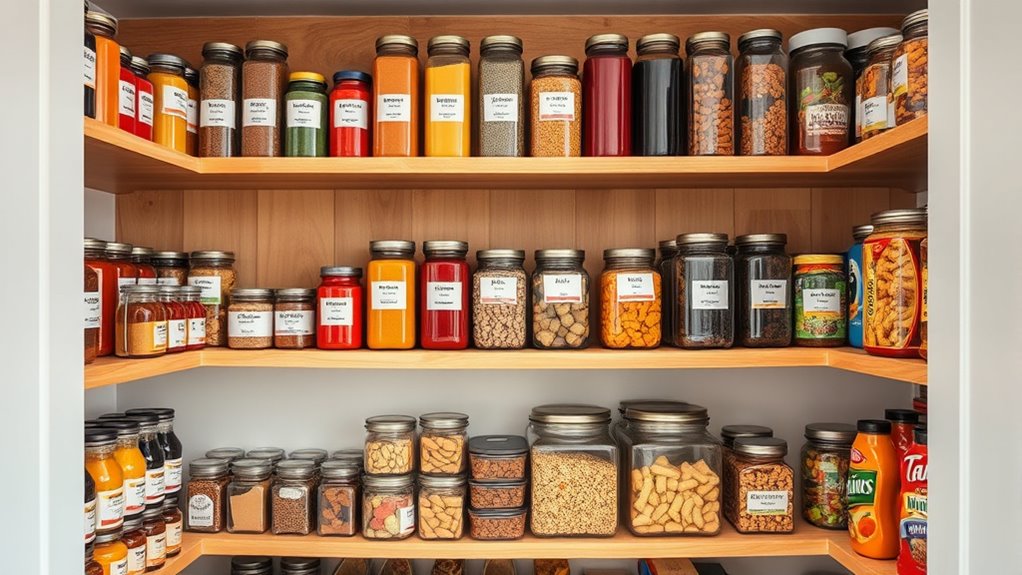
When it comes to keeping your food fresh, airtight food storage canisters are indispensable. These containers seal out moisture and air, preventing spoilage and extending shelf life for grains, sugars, and snacks. Plus, they come in various sizes and styles to suit your kitchen’s aesthetic and storage needs.
| Size | Material | Ideal Use |
|---|---|---|
| Small | Glass | Herbs and spices |
| Medium | Plastic | Snack foods |
| Large | Stainless Steel | Bulk grains |
Investing in high-quality airtight canisters is essential for maintaining flavor and freshness. With the right canisters, you can not only optimize your food storage but also keep your kitchen organized and visually appealing.
Specialty Containers for Produce
Airtight canisters are great for grains and snacks, but keeping produce fresh requires a different approach. Specialty containers designed for fruits and vegetables can greatly extend their shelf life.
Here are some options you should consider:
Explore various container options to keep your produce fresh and minimize waste effectively.
- Ventilated bins: These allow air circulation, preventing mold.
- Produce savers: Features like moisture control and ethylene gas reduction keep your items fresher longer.
- Glass containers: They’re non-toxic and help you see what you’ve got.
- Baskets with lids: Perfect for root vegetables, maintaining a cool atmosphere.
- Reusable produce bags: Great for smaller items, promoting air flow while being eco-friendly.
Using these containers, you’ll guarantee your produce stays crisp and delicious, reducing waste and grocery trips.
Questions
How Do I Determine the Right Size Container for My Food?
To determine the right size container for your food, consider the portion size you typically store, the type of food, and how you’ll stack or store it. Remember, too much space can lead to spoilage.
Can I Use Metal Containers in the Microwave?
No, you shouldn’t use metal containers in the microwave. Metal can cause sparks and potentially damage the microwave. It’s better to stick with glass or microwave-safe plastic containers for safe heating. Always check labels for safety.
What Is the Best Way to Clean Silicone Food Bags?
So, you’re thinking of using silicone food bags as your new best friends, huh? Just toss ‘em in soapy water or the dishwasher, and they’ll shine like a star—no more mystery smells!
Are All Glass Containers Dishwasher Safe?
Not all glass containers are dishwasher safe. You should check the manufacturer’s instructions to be sure. Some might be safe only on the top rack, while others could require hand washing to avoid damage.
How Long Can Food Stay Fresh in Vacuum Sealed Containers?
Food can stay fresh in vacuum-sealed containers for about one to three weeks, depending on the type of food. Remember, proper sealing and refrigeration can extend freshness considerably, reducing waste and saving money.