Airtight Containers vs. Glass Jars: Which Is Better?

When choosing between airtight containers and glass jars, consider what matters most to you. Airtight containers excel in food preservation, keeping moisture and odors at bay, and are often stackable for easy storage. Glass jars are durable, non-porous, and eco-friendly, but they can be fragile and may not seal as effectively. Your choice depends on priorities like convenience or environmental impact. Discover more about how each option measures up in different aspects.
Key Takeaways
- Airtight containers excel in moisture and odor control, ensuring longer food preservation compared to less effective glass jars.
- Glass jars are eco-friendly, durable, and aesthetically pleasing, but may lack effective sealing for optimal freshness.
- Airtight containers offer stackability and space efficiency, making them ideal for organized pantry storage.
- Glass jars are non-porous, easy to clean, and do not absorb odors, but are fragile and can break easily.
- The environmental impact differs, with glass jars being recyclable and reusable, while plastics from airtight containers may contribute to waste.
The Basics of Airtight Containers
Airtight containers are a staple in many kitchens and pantries. They’re designed to keep your food fresh by preventing air, moisture, and contaminants from getting in.
These containers typically feature a sealing mechanism, which locks in the contents and maintains the desired environment for storage. You’ll find various materials used, like plastic and glass, each with unique properties to examine. According to experts, different types of materials can significantly impact the effectiveness of food preservation.
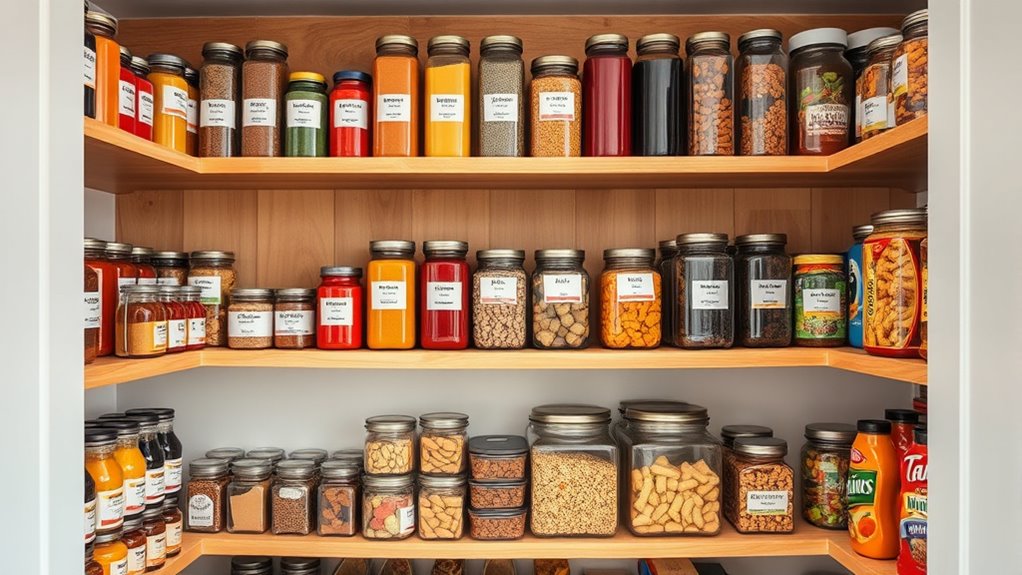
Most are easy to stack and store, making them convenient for organizing your pantry. When selecting an airtight container, think about the size, shape, and intended use, whether for dry goods like cereal or liquids.
Keeping your food sealed not only preserves flavor but also reduces waste, helping you maintain a more efficient kitchen. Additionally, airtight containers are often more convenient for long-term storage as they effectively keep air and moisture out, thus preserving freshness.
Advantages of Airtight Containers
When you’re looking to maximize the freshness of your food, using airtight containers is a smart choice. These containers effectively lock out moisture and air, preserving your ingredients and leftovers longer. They come in various sizes and shapes, making them versatile for different storage needs. Plus, they’re often lightweight and stackable, saving you space.
Here’s a quick look at the advantages:
| Advantage | Description |
|---|---|
| Freshness | Keeps food fresh longer |
| Versatility | Available in various sizes |
| Space-saving | Stackable designs for easy storage |
| BPA-free options | Many are made from safe materials |
Choosing airtight containers means you’re prioritizing quality and convenience in your food storage routine.
Disadvantages of Airtight Containers
While airtight containers offer many benefits, they aren’t without their downsides. You might find that these containers can sometimes trap moisture, leading to spoilage or mold growth if not used correctly.
Airtight containers have benefits, but improper use can trap moisture, risking spoilage and mold growth.
Additionally, the materials can be prone to scratches or cracks, which could compromise their sealing ability over time. And let’s not forget about the cost—quality airtight containers can be pricier than traditional storage options.
- Can trap unwanted moisture, causing spoilage
- More prone to scratches and damage
- Often more expensive than other storage alternatives
Being aware of these issues can help you make a more informed choice when deciding how to store your food or other items.
The Essentials of Glass Jars
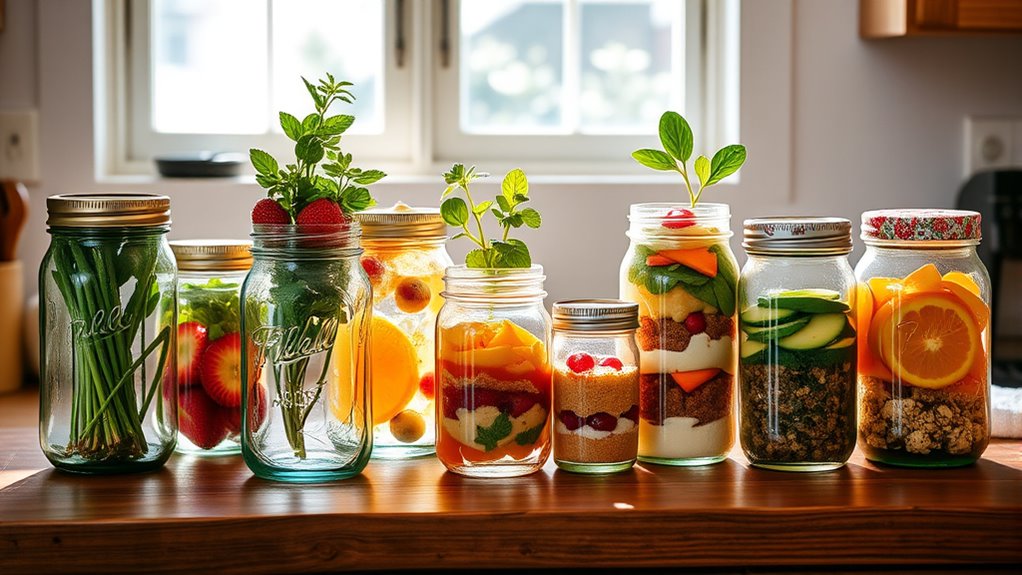
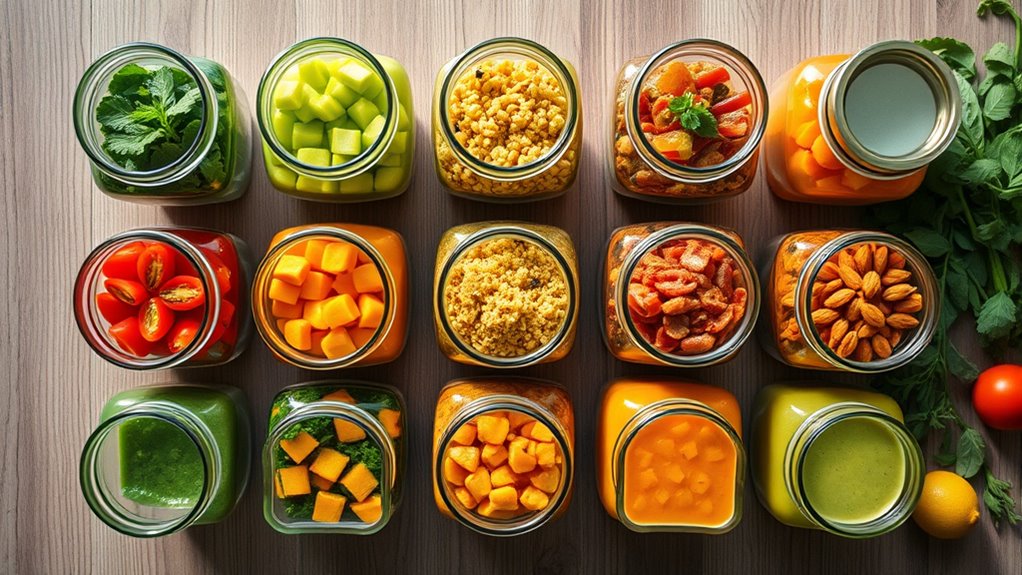
Though they may seem traditional, glass jars are incredibly versatile and practical for storage. You can use them for preserving food, organizing your pantry, or even as decorative pieces in your home. Their transparent design makes it easy to see what’s inside, so you won’t waste time searching through opaque containers. Additionally, using stackable storage solutions can enhance your organization even further, making it easier to utilize vertical space in your kitchen.
When choosing glass jars, consider various sizes and shapes to best fit your needs. Wide-mouth jars are perfect for bulk items, while smaller ones are great for spices. Look for jars with secure lids to keep contents fresh, whether you’re storing dry goods or homemade sauces.
Plus, they’re easy to clean and can be reused multiple times, making them an eco-friendly option. Additionally, glass jars can significantly reduce plastic waste in your kitchen, promoting a more sustainable lifestyle.
Advantages of Glass Jars

One significant advantage of glass jars is their durability, which means they can withstand temperature changes without warping or leaching harmful chemicals into your food. This makes glass jars an excellent choice for food storage, as you can microwave or freeze them with confidence.
Glass jars are durable and safe, capable of withstanding temperature changes without releasing harmful chemicals, perfect for food storage.
Additionally, they’re easy to clean, non-porous, and won’t absorb odors or stains.
Here are a few more advantages of using glass jars:
- Eco-Friendly: Glass is recyclable and helps reduce plastic waste.
- Visibility: You can easily see the contents, making it simpler to find what you need.
- Aesthetic Appeal: Their classic look adds charm to your kitchen or pantry storage.
These benefits make glass jars a fantastic option for anyone looking to store food effectively!
Disadvantages of Glass Jars
While glass jars offer many benefits, they come with some notable downsides.
For one, they can be fragile and easily break, leading to potential mess or injury.
Additionally, their airtight seal options are often limited, which mightn’t keep your items as fresh as you want.
Fragility and Breakage Risks
Although glass jars are often praised for their aesthetic appeal and sustainability, their fragility poses significant risks. One wrong move and you could find yourself dealing with shattered glass and a big mess. This vulnerability can deter some people from using glass jars for storage or preservation.
Consider these potential downsides:
- Breakage: Accidental drops can result in irreparable damage, making them less practical for active households.
- Sharp Edges: When glass breaks, it creates sharp shards that can pose a safety hazard, particularly for children and pets.
- Fragile Contents: If you’re storing fragile items, glass jars can increase the risk of breakage, limiting your options.
Thus, it’s important to weigh these concerns when deciding on storage solutions.
Limited Airtight Seal Options
When it comes to airtight seals, glass jars often fall short compared to their airtight container counterparts. While they can provide some level of sealing, their effectiveness varies based on the type of lid used.
Metal lids may rust over time, compromising the seal, and rubber gaskets wear out or degrade, reducing their airtight capabilities.
Plus, many glass jars lack additional features like one-way valves that can enhance freshness by releasing gases.
If you’re looking to keep food fresh for longer durations, you might find that the limited airtight options offered by glass jars just don’t stack up against containers designed specifically for sealing.
Comparison of Storage Efficiency
When it comes to storage efficiency, you’ll want to contemplate how airtight containers stack up against glass jars.
Their air tightness ratings can considerably impact moisture control, while space utilization may differ as well.
Let’s take a closer look at how these factors influence your storage choices.
Air Tightness Ratings
Air-tight containers really shine when it comes to preserving food freshness and preventing spoilage. Their design guarantees minimal air exchange, vastly improving the longevity of your stored items.
When comparing air-tight ratings, you’ll find they often outperform glass jars in these areas:
- Prevention of moisture buildup: Keeps humidity away from your food.
- Odor containment: Eliminates unpleasant smells and flavors from affecting other items.
- Extended shelf life: Maintains food quality for weeks or even months longer.
Glass jars can be great, but they may allow a bit of air in over time, which can compromise food freshness.
Choosing the right container is essential to secure your food stays delicious and safe to eat.
Space Utilization Differences
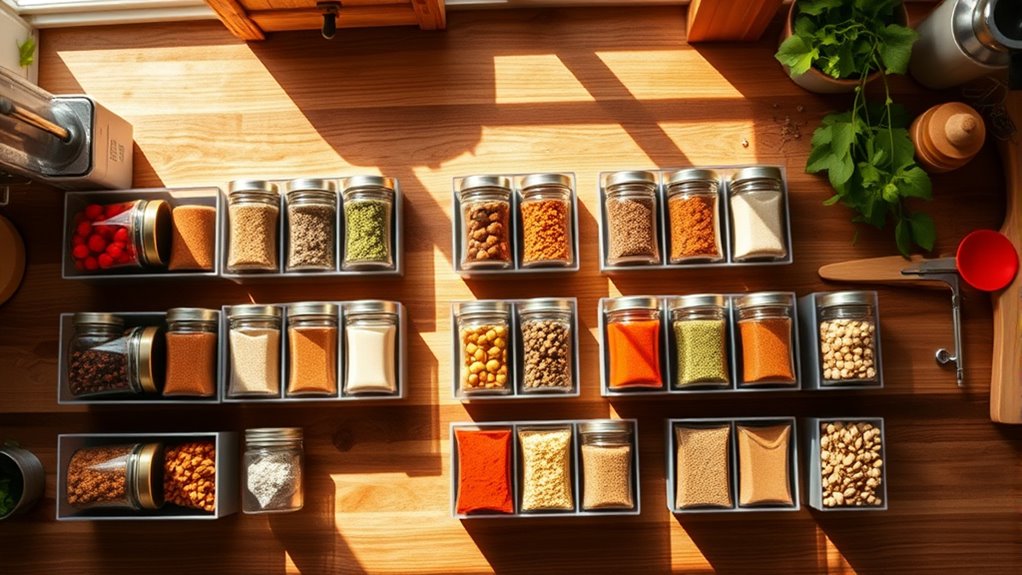
Effective space utilization is essential in any kitchen, and how you choose to store your food can make all the difference. Airtight containers usually have a more uniform shape, allowing them to fit snugly in cabinets or pantries.
They often come in stackable designs, maximizing vertical space, which is vital for smaller kitchens. On the other hand, glass jars can be bulkier and may take up more space if not arranged carefully.
However, their transparency lets you instantly see contents, which can help you optimize your layout. If you’re tight on space, consider how shapes, stackability, and visibility impact your choices.
Ultimately, think about what works best for your kitchen’s specific dimensions and your personal organization style.
Moisture Control Effectiveness
Choosing the right storage method can markedly impact moisture control, which directly affects the freshness of your food.
Airtight containers excel in creating a barrier against humidity, preventing moisture from seeping in and spoiling your ingredients. On the other hand, while glass jars can provide some moisture control, they may not seal as tightly as some airtight options, leading to potential exposure. Additionally, using space-saving gadgets like compact food processors can help streamline meal prep, allowing you to store ingredients effectively in these containers.
Consider these points when evaluating moisture control:
- Airtight Seals: Containers with rubber gaskets offer superior sealing.
- Glass & Absorption: Glass can absorb moisture from the surroundings, impacting contents.
- Temperature Fluctuations: Airtight containers help maintain stable conditions regardless of changes. Additionally, storing leftovers promptly is essential to prevent bacterial growth, ensuring food safety and prolonging freshness.
Ultimately, for ideal moisture control, airtight containers usually take the lead in preserving food freshness.
Aesthetic Appeal in the Kitchen
While you may prioritize functionality in your kitchen, the aesthetic appeal of your storage solutions can make a significant impact on the overall vibe of the space. Airtight containers often lean towards a more utilitarian look, while glass jars can add a touch of elegance. Mixing and matching these options, you can create a visually pleasing display that also serves a purpose. Additionally, having stylish storage options can enhance dining experiences, making your kitchen a more inviting and enjoyable space. By incorporating elegant serveware styles in your kitchen, you’ll elevate the presentation of your meals, creating an inviting atmosphere for family and guests.
| Storage Option | Aesthetic Appeal | Best For |
|---|---|---|
| Airtight Containers | Modern, sleek | Pantry organization |
| Glass Jars | Rustic, timeless | Displaying ingredients |
| Combination | Eclectic, functional | Versatile storage |
Incorporating these elements lets you enjoy both beauty and practicality in your kitchen.
Environmental Impact of Each Option
When considering airtight containers and glass jars, it’s crucial to look at their environmental impact.
You might want to assess the carbon footprint of both options as well as their recycling and reusability factors.
Carbon Footprint Comparison
Although both airtight containers and glass jars serve similar purposes in food storage, their carbon footprints can differ considerably.
When considering which option to choose, you might want to look at several key factors influencing their environmental impact:
- Materials used: Airtight containers are often made from plastics, which have higher production emissions compared to glass.
- Manufacturing process: The energy required to produce glass jars can be significant, but they’re typically more durable, hence potentially lasting longer.
- Transportation: Glass jars are heavier, leading to a larger carbon footprint during transport, while lighter plastic containers are more efficient to ship.
Recycling and Reusability
Understanding the recycling and reusability of airtight containers and glass jars enhances your ability to make an informed choice.
Glass jars are often recyclable, and since they can be reused infinitely without degrading, they make a sustainable option. You can easily repurpose them for storage or crafts, extending their life.
On the other hand, many airtight containers are made from plastics that may not always be recyclable, depending on the type.
While some plastic containers can be reused for food storage, they can wear out over time and may end up in landfills.
Consider the long-term environmental impact of your choice; opting for glass jars supports a greener lifestyle while offering versatility in everyday use.
Making the Right Choice for Your Needs
Choosing the right storage solution can greatly impact the freshness and longevity of your food.
When considering whether to go for airtight containers or glass jars, think about your specific needs and preferences.
Here are a few factors to weigh:
- Material Safety: Are you concerned about chemicals in plastics?
- Storage Space: Do you have the room for bulky jars, or do you need stackable options?
- Ease of Use: Do you prefer quick access or organized, labeled storage?
Questions
Can Airtight Containers Be Used in the Microwave?
Yes, you can use airtight containers in the microwave, but make sure they’re microwave-safe. Always check for any labels or instructions before heating, as some materials can warp or release harmful chemicals when heated.
Are Glass Jars Dishwasher Safe?
Like a soldier preparing for battle, you can confidently toss glass jars in the dishwasher. Most are dishwasher safe, but check the manufacturer’s label just in case; you wouldn’t want unexpected surprises lurking around!
How Do You Properly Seal Airtight Containers?
To properly seal airtight containers, guarantee the lid fits snugly, press down firmly, and check for any gaps. Always clean the rim before sealing to avoid debris, guaranteeing an effective airtight closure.
Do Airtight Containers Prevent Freezer Burn?
Think of airtight containers as fortresses for your food; they absolutely help prevent freezer burn. By keeping unwanted air at bay, they act like a shield, preserving flavor and texture for your frozen treasures.
Can Glass Jars Be Reused for Canning?
Yes, you can reuse glass jars for canning, as long as they’re in good condition. Just make certain the lids seal properly. It’s a great way to save money and reduce waste while preserving food!