How to Choose the Right Dinnerware for Your Home

Choosing the right dinnerware starts with evaluating your lifestyle and dining needs. Think about the materials that suit your style, like porcelain for elegance or melamine for casual use. Explore various styles and color schemes, ensuring they match your home’s décor. Don’t forget size and shape for practicality. Set a budget to guide your choices and aim for a mix of functionality and aesthetics. Want to elevate your dining experience even further? Discover more tips and insights!
Key Takeaways
- Assess your dining habits to determine if you need formal or casual dinnerware, considering entertaining frequency and family meals.
- Choose materials based on durability and style, with options like porcelain for elegance or melamine for practicality.
- Select a color scheme and design that complements your home décor, balancing personal taste with the overall aesthetic.
- Prioritize size, shape, and durability for functionality, ensuring dinnerware fits meal portions and is resilient for everyday use.
- Consider mixing and matching pieces while maintaining a cohesive look, allowing for personalized and creative table settings.
Assess Your Lifestyle and Dining Needs
When you think about choosing dinnerware, it’s essential to contemplate your lifestyle and dining needs, as this will guide you toward the best options for your home.
Choosing dinnerware should reflect your lifestyle and dining preferences to find the ideal options for your home.
Reflect on how often you entertain guests versus sharing meals with family. If you’re a frequent host, you might prefer more formal sets that impress. On the other hand, casual dining might call for versatile pieces that withstand everyday usage. Elegant dinnerware sets can elevate your hosting experience, making any meal feel special.
Think about your cooking preferences too; if you often prepare large meals, larger plates could be beneficial.
Don’t forget to take into account your storage space; some dinnerware requires more room than others.
Additionally, consider the durability of materials as it will influence how well the dinnerware lasts over time.
Finally, reflect on aesthetics—what style resonates with you, and how does it fit into your home’s décor?
Ultimately, let practicality and personal taste guide your decision.
Consider Material Options
Before settling on a dinnerware set, you’ll want to weigh the various material options available.
Porcelain and bone china are durable and elegant, perfect for formal occasions.
If you’re often entertaining, tempered glass can be both stylish and sturdy, great for casual dining.
Stoneware and earthenware offer a rustic charm, but keep in mind they can be heavier and more prone to chipping.
For everyday use, consider melamine—it’s lightweight, shatterproof, and available in many designs. Additionally, explore options like sustainable materials that can significantly reduce your environmental impact.
If sustainability is a priority, bamboo or recycled materials could be appealing options.
Ultimately, think about how each material fits into your lifestyle, whether you prioritize aesthetics, durability, or ease of care. Choosing materials such as ceramic or stoneware ensures durability and resilience, which is essential for enhancing the longevity of your dinnerware.
It’s about finding the right balance for your dining needs.
Explore Different Styles and Designs

When choosing dinnerware, you’ll want to contemplate the style and design that best reflects your taste.
Whether you prefer classic elegance or modern flair, there are endless color and pattern options to explore.
Let’s also touch on how different materials can influence both aesthetics and functionality.
Classic vs. Modern Styles
Choosing between classic and modern dinnerware can be overwhelming, but understanding the essence of each style can help you make an informed decision.
Classic dinnerware often features timeless designs, perfect for those who appreciate traditions.
Modern dinnerware, on the other hand, embraces minimalism and unique shapes, appealing to contemporary tastes.
Here are some key points to ponder:
- Elegance: Classic sets often include intricate patterns and rich colors that exude sophistication.
- Functionality: Modern dinnerware tends to prioritize practicality and durability, making it great for everyday use.
- Versatility: Classic styles can complement formal occasions, while modern pieces are ideal for casual dining and entertaining.
Think about your lifestyle and personal aesthetic to find the perfect dinnerware style for your home!
Color and Pattern Choices
While selecting dinnerware, color and pattern choices play an essential role in defining the mood and style of your dining experience. You can create a vibrant atmosphere with bold colors or opt for calming shades for a relaxed setting. Reflect on whether you want a playful design or something more elegant; both can greatly influence your table’s aesthetics.
Floral patterns can add a touch of nostalgia, while geometric designs may lend a modern vibe. Don’t forget to think about the versatility of your choices; neutral tones can complement various themes and occasions.
Ultimately, select colors and patterns that resonate with you, as they’ll make your dining experiences feel more personal and enjoyable. Your dinnerware should reflect your unique style and preferences.
Material Options Explained
Color and pattern choices are important, but the material of your dinnerware can considerably affect both functionality and style.
When selecting dinnerware, consider these popular materials:
- Porcelain: Known for its durability and elegance, porcelain is perfect for formal settings.
- Stoneware: Heavier and sturdier, stoneware is excellent for casual dining and can withstand everyday use.
- Melamine: Ideal for outdoor dining, melamine is lightweight, unbreakable, and comes in vibrant designs.
Each material has its unique benefits.
Whether you’re hosting a dinner party or having a cozy family meal, the right dinnerware sets the tone for your dining experience.
Evaluate Color Schemes and Patterns

When it comes to dinnerware, a thoughtfully selected color scheme can dramatically influence your dining experience.
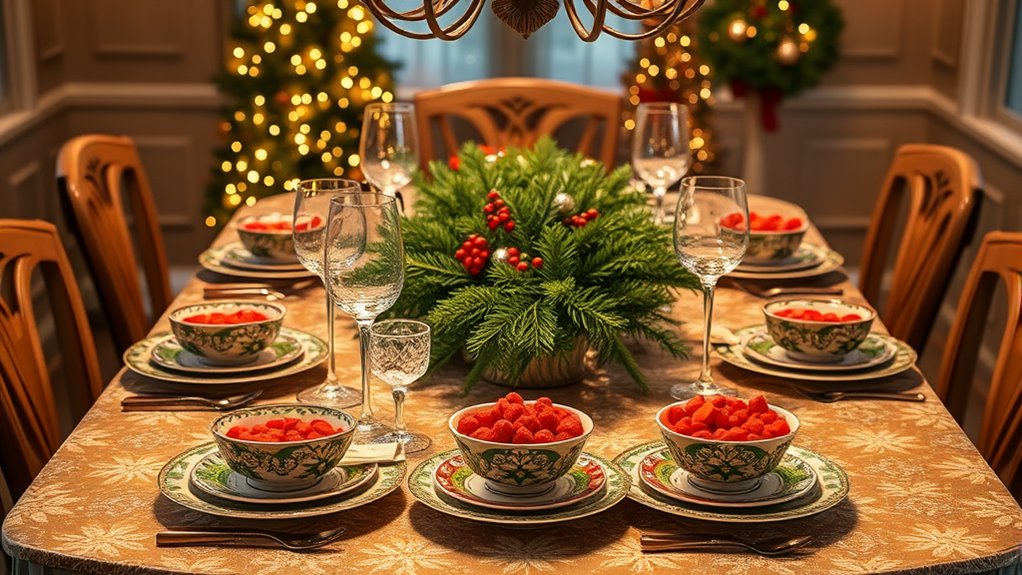
Think about your home’s overall aesthetic. Do you prefer warm earth tones, cool blues, or vibrant patterns? Selecting colors that complement your kitchen or dining space will create a cohesive look.
Reflect on the atmosphere you want to evoke; softer colors can inspire tranquility, while bold patterns can energize a meal.
Additionally, patterns can provide a unique touch—like florals for a rustic feel or geometric designs for a modern twist.
Remember to contemplate practicality, too. Lighter colors may show stains more, while darker shades can be more forgiving.
Ultimately, choose hues and patterns that reflect your personal style and enhance the joy of dining. Aesthetically pleasing and functional table settings can significantly improve the dining experience, making every meal feel special.
Think About Size and Shape
Choosing the right size and shape of dinnerware is essential to both functionality and aesthetics, as it can enhance your dining experience considerably.
Selecting the right dinnerware size and shape is crucial for both practicality and enhancing your overall dining experience.
You’ll want to take into account the following factors:
- Portion Sizes: Verify the plates accommodate the types of meals you typically serve, whether it’s a hearty feast or a light salad.
- Table Space: Select shapes that complement your dining table, whether it’s round, square, or something unique. A more compact design can help save space.
- Type of Occasion: Reflect on whether you’ll be using the dinnerware for casual family meals or formal gatherings, as this will affect your choice in size and shape.
Taking these aspects into account will help you create the perfect set for your dining needs.
Factor in Durability and Maintenance
Once you’ve considered the size and shape of your dinnerware, durability and maintenance come into play. You’ll want to choose materials that can withstand everyday use without chipping or breaking.
Stoneware and porcelain are popular choices, thanks to their strength and resistance to scratches. If you’ve got kids or entertain often, look for dinnerware that’s dishwasher and microwave safe for easy cleanup. Choosing elegant dinnerware can enhance your dining experience while remaining practical.
Keep in mind that some materials, like fine china, may require special care or hand washing, which mightn’t suit your lifestyle. Additionally, stoneware is more chip-resistant compared to porcelain, making it a practical choice for busy households.
Consider how much effort you’re willing to put into maintaining your dinnerware. Ultimately, the right balance of durability and low maintenance will guarantee your dinnerware looks great and lasts for years to come.
Set a Budget
Establishing a budget is critical when selecting dinnerware for your home. By setting a financial limit from the start, you’ll avoid overspending and make the decision-making process smoother.
Here are some factors to take into account while planning your budget:
- Quality vs. Quantity: Decide if you want a few high-quality pieces or a larger set of everyday dishes.
- Material Costs: Different materials have varying price ranges; porcelain and stoneware might be pricier than melamine or plastic.
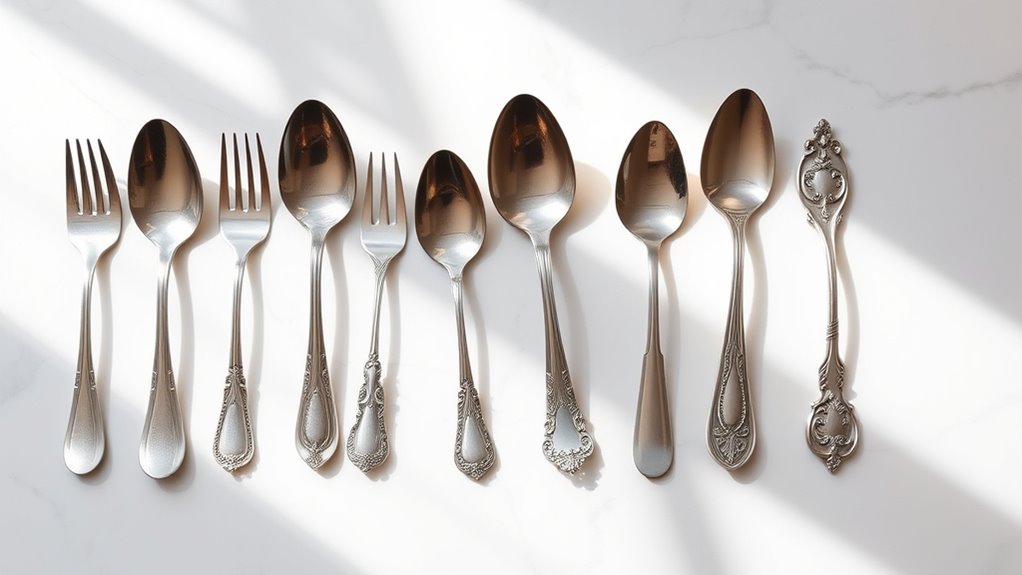
- Additional Items: Don’t forget to factor in the cost of accessories like serving platters, bowls, and utensils.
Once you’ve established your budget, you’ll be better prepared to choose dinnerware that meets both your needs and your financial limits.
Balance Functionality and Aesthetics
Striking the right balance between functionality and aesthetics is essential when selecting dinnerware for your home. You want dinnerware that not only looks great on your table but also stands up to daily use.
Consider materials that are durable and dishwasher-safe, so you’re not constantly worrying about chips or scratches. Look for pieces that complement your existing decor while also feeling comfortable to use.
Pay attention to the shape and size of the dinnerware, as these factors affect both presentation and practicality. Remember, the best dinnerware enhances your dining experience, striking a chord between beauty and everyday usability.
Mix and Match Dinnerware
Mixing and matching dinnerware can really bring your table to life.
You can play with different color combinations and themes, while also balancing textures and patterns to create a unique look.
It’s all about finding the right combinations that reflect your style and enhance your dining experience.
Color Combinations and Themes
Creating an enchanting table setting often starts with the right color combinations and themes for your dinnerware.
When you mix and match, think about how colors can complement or contrast with each other.
Consider these tips for an eye-catching display:
- Stick to a Palette: Choose two or three main colors to create harmony and balance.
- Seasonal Themes: Think about using colors that reflect the seasons—pastels for spring, warm hues for fall.
- Mix Materials: Combine different finishes, like matte and glossy, to add depth without overwhelming your table.
Additionally, remember that the role of seasonal themes can inspire your choices and enhance the overall dining experience.
Textures and Patterns Balance
The right color combinations can set the stage, but the interplay of textures and patterns takes your dinnerware to the next level.
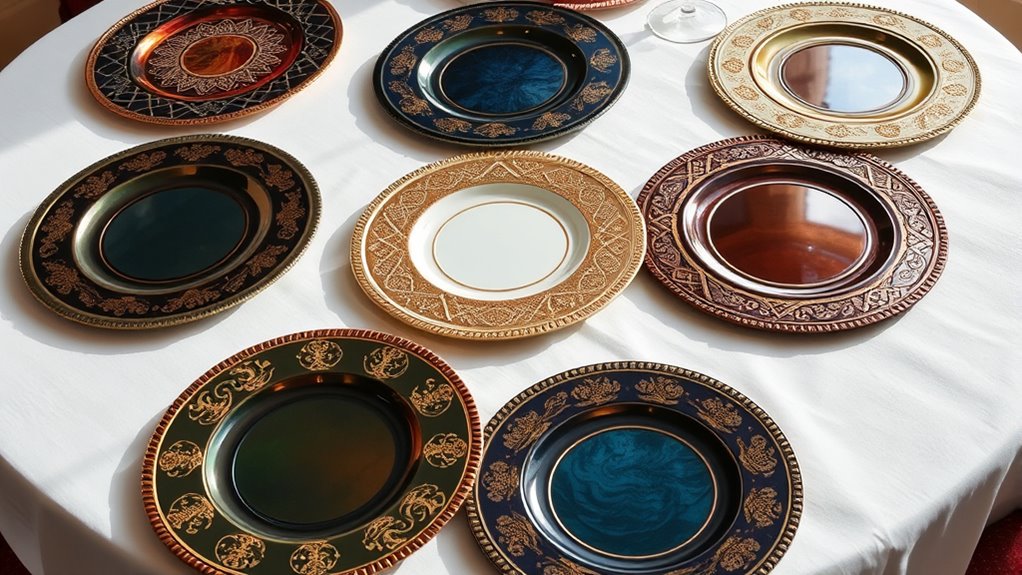
Mix and match different materials—like matte finishes with glossy accents or stoneware with fine china—to create a visual feast. Don’t shy away from bold patterns; they can add excitement to your table.
You can balance busy prints with softer solids to avoid overwhelming your guests. Think about scale too; pairing larger-patterned plates with smaller ones can create an eye-catching effect.
Ultimately, it’s about finding harmony—just experiment and trust your instincts.
You’ll discover that combining various styles not only reflects your personality but also elevates the dining experience, making every meal feel special.
Personalize Your Choices
Dinnerware is more than just functional; it’s a reflection of your personal style and taste.
Dinnerware reflects not just function, but your unique style and personal taste in every meal.
Whether you’re hosting a fancy dinner or enjoying a casual meal, your choices can express who you are. Personalizing your dinnerware can make every dining experience special.
Here are some tips to help you:
- Choose colors that resonate: Bright hues can energize your space, while neutral tones offer elegance.
- Mix and match sets: Don’t be afraid to combine different styles and patterns for a unique look.
- Add personal touches: Consider dining sets that feature motifs or designs that hold sentimental value.
Questions
How Many Place Settings Should I Buy for My Household?
Think of your dinnerware like a toolbox. You need enough place settings for every occasion, so consider your household size plus a couple extras for guests. Typically, eight settings should cover most gatherings comfortably.
Can Dinnerware Be Used in the Microwave and Dishwasher?
Yes, many dinnerware sets are microwave and dishwasher-safe, but not all. Check the labels before purchasing to verify they fit your needs, and always follow the manufacturer’s guidelines for ideal use and longevity.
What Is the Best Dinnerware for Outdoor Dining?
When it comes to outdoor dining, nothing beats melamine dinnerware for its durability and vibrant designs. It’s lightweight, shatterproof, and perfect for picnics. Just don’t leave it in the sun too long; it’ll fade!
Are There Eco-Friendly Dinnerware Options Available?
Yes, there are plenty of eco-friendly dinnerware options available. You can opt for bamboo, recycled materials, or compostable plates. These choices are sustainable and stylish, making your meals more environmentally friendly without compromising on aesthetics.
How Often Should I Replace My Dinnerware?
You should replace your dinnerware every few years if it’s chipped, stained, or the material has worn down. Regularly check for defects to guarantee safety and aesthetics, helping maintain a pleasant dining experience.