Mixing and Matching Dinnerware Like a Pro

Mixing and matching dinnerware like a pro is all about balancing color, texture, and pattern. Start with a cohesive color palette that reflects the mood you want to create. Combine different textures for sensory appeal, and layer patterns to add visual interest. Vary shapes and sizes to keep things dynamic, and don’t forget seasonal elements and personal accessories to make your table setting unique. Keep exploring these ideas for an even more stunning dining experience!
Key Takeaways
- Combine warm and cool colors for a balanced table, using seasonal hues to enhance the overall dining atmosphere.
- Pair different textures, such as glossy plates with matte bowls, to create contrast and visual interest.
- Layer patterns thoughtfully; mix floral designs with stripes while ensuring complementary colors tie everything together.
- Select a cohesive theme that reflects your personality, using centerpieces like flowers or candles to enhance ambiance.
- Incorporate eco-friendly dinnerware while creatively mixing shapes and sizes to achieve a stylish and inviting table setting.
Understanding Color Theory in Dinnerware
When you understand color theory in dinnerware, you can elevate your table setting effortlessly. Colors have an emotional impact and can set the mood for any meal.
Mastering color theory in dinnerware allows you to effortlessly enhance your table setting and influence the mood of your meals.
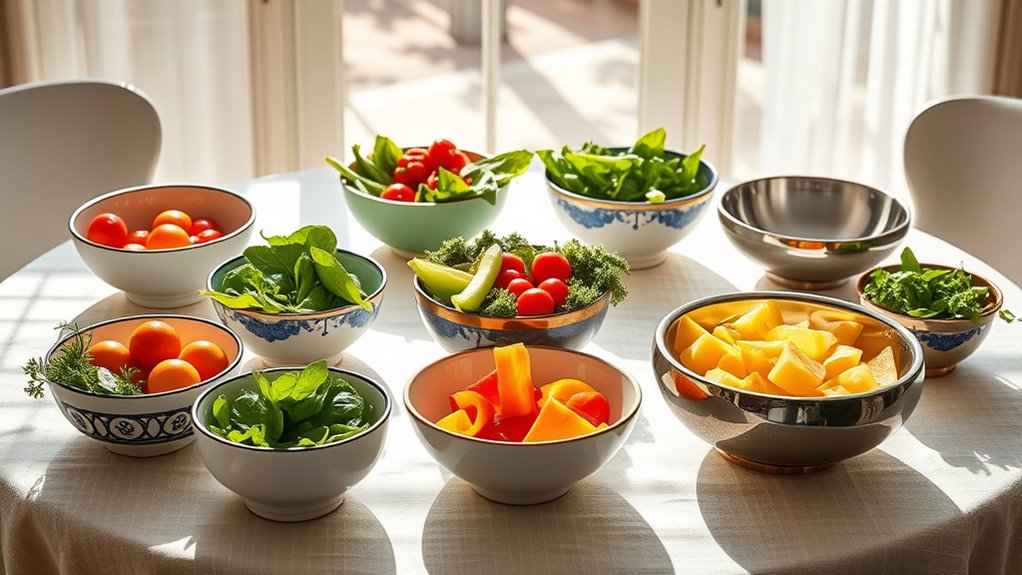
For instance, warm colors like reds and oranges create an inviting atmosphere, while cool colors like blues and greens offer a calming effect.
When mixing dishes, think about complementary and analogous colors to create visual harmony. For a chic look, pair a vibrant plate with a neutral bowl; it makes both pieces pop.
Don’t shy away from bold combinations either—using contrasting colors can add excitement and draw attention.
Exploring Texture Combinations
While color can set the mood, the texture of your dinnerware adds another layer of sensory appeal. Mixing various textures can create a mesmerizing dining experience that engages not just the eyes but also the hands.
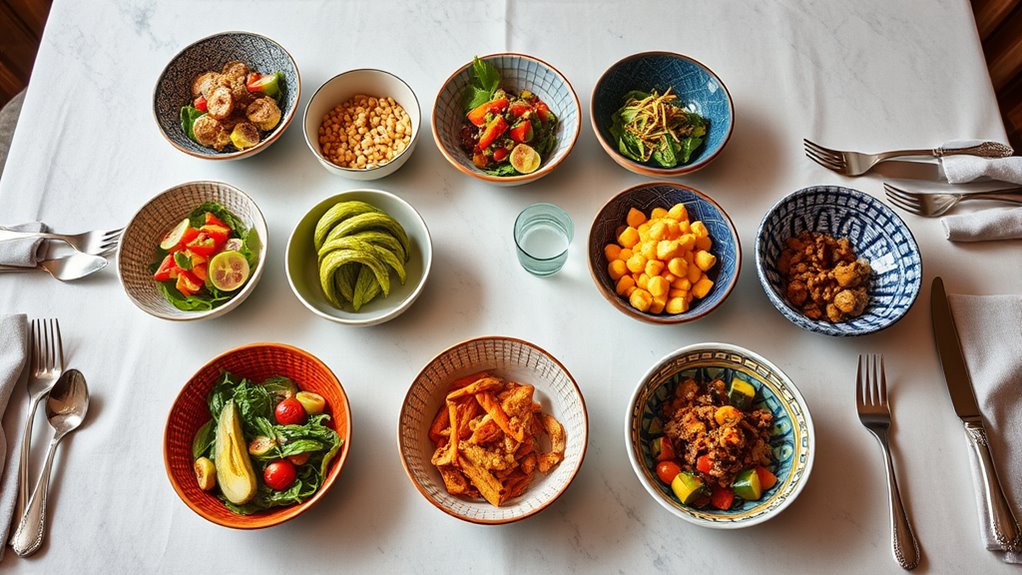
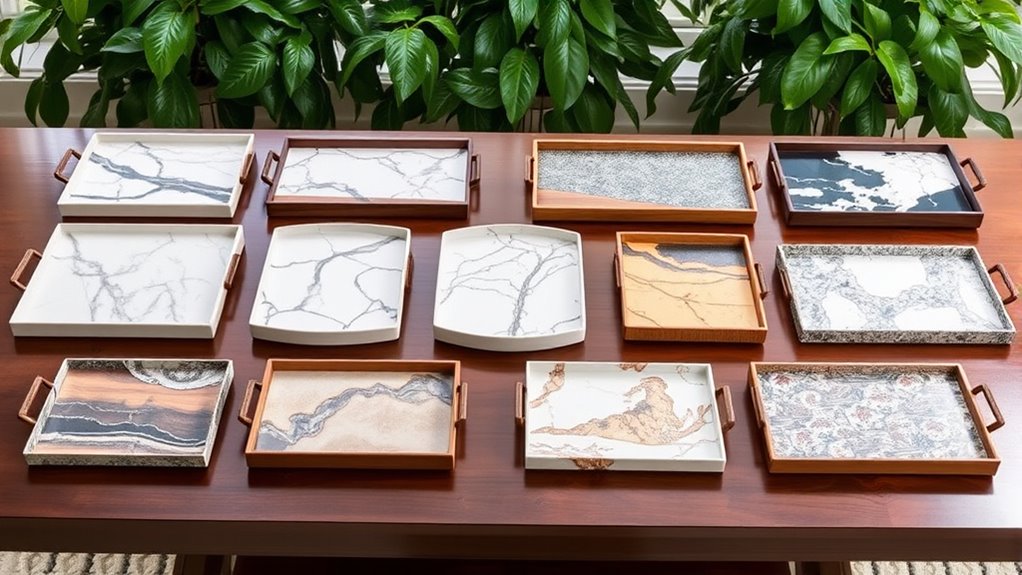
Think about pairing a smooth, glossy plate with a rustic, matte bowl; this contrast draws the eye and piques interest. You might try combining raised patterns with flat surfaces, like embossed designs on a charger under simple white plates. Choosing pieces that are made from durable materials can enhance both the aesthetic and practicality of your collection.
Don’t shy away from materials, either—mix ceramic with glass or wood for an eclectic feel. Just remember, harmony is key. Aim for a balance between bold and subtle textures so your table feels intentional and inviting, allowing each piece to complement the overall aesthetic. The right dinnerware sets can elevate your hosting experience, ensuring that every meal feels special.
Layering Patterns for Visual Interest
Texture plays a significant role in creating an inviting table setting, but layering patterns can elevate your dining experience even further. Mixing floral designs with stripes or checkered patterns can yield a visually stimulating effect. Think about the color palette too; complementary colors can tie everything together. Investing in elegant serveware can truly enhance the overall aesthetic of your table. Adding affordable luxury dining options to your collection can expand your style while keeping within budget.
Here’s a quick guide to help you visualize your options:
| Pattern Type | Example |
|---|---|
| Floral | Sunflower design |
| Stripes | Navy and white |
| Geometric | Black and gold |
| Polka Dots | Soft blush pink |
| Plaid | Classic red and green |
Finding Balance With Shapes and Sizes
When mixing dinnerware, it’s essential to take into account how different shapes and sizes can complement each other. Finding harmony in visual weight and arrangement can elevate your table setting. Think about how the pieces interact to create a balanced and inviting dining experience. Additionally, considering color, texture, and pattern compatibility can further enhance the overall aesthetic of your table.
Complementary Shapes and Sizes
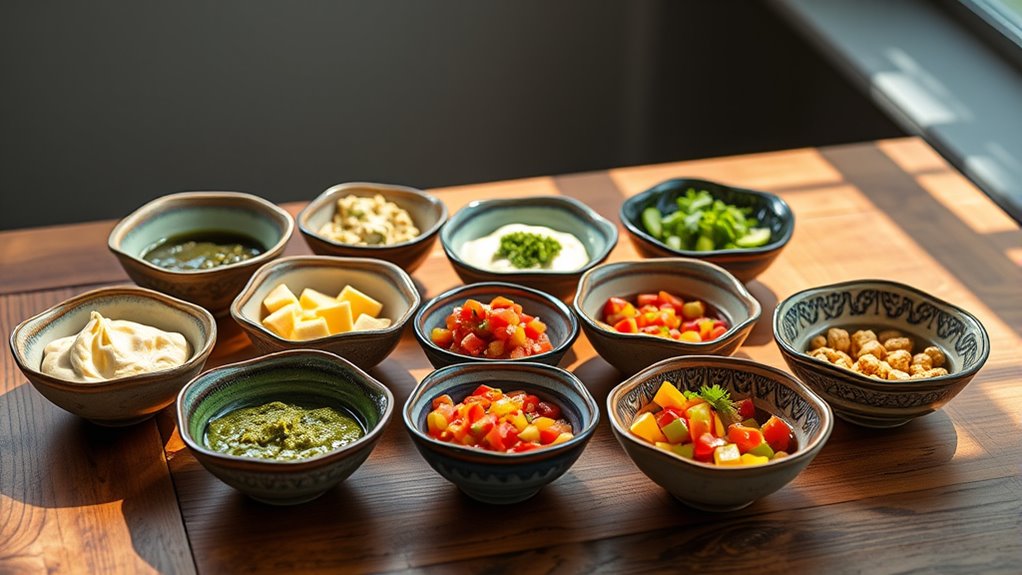
Finding the right balance between shapes and sizes in your dinnerware can elevate your table setting from ordinary to extraordinary. When mixing plates, bowls, and serving dishes, consider how different shapes interact. A round plate can harmonize beautifully with a square bowl, creating visual interest.
Don’t shy away from varying sizes, either; a larger charger under a smaller plate can add depth.
Use smaller accent pieces to complement larger items without overwhelming the table. Keep in mind that odd numbers often create a more visually appealing arrangement.
Visual Weight and Arrangement
To create a visually balanced table setting, it’s important to take into account the visual weight of your dinnerware. This means considering both size and shape when arranging your plates, bowls, and serveware.
For example, heavier, deeper dishes can anchor the center of the table, while lighter, shallower pieces can be placed around the edges to draw the eye outward.
Mixing larger serving platters with smaller individual plates can create a dynamic look, but balance is key. Avoid overwhelming the table with too many large items; instead, pair them with medium and small pieces.
Additionally, alternate shapes—round with square—to maintain interest. By thoughtfully arranging each piece, you’ll achieve a harmonious setting that feels intentional and inviting.
Incorporating Seasonal and Thematic Elements

When you think about setting a table, consider how seasonal colors and thematic accents can elevate your dining experience.
Using rich autumn hues or bright summer tones can really make your dinnerware pop. Pairing those colors with unique table accents will create a memorable atmosphere that reflects the season or theme.
Seasonal Color Palette
Embracing a seasonal color palette transforms your dinnerware into a stunning visual narrative that reflects the changing themes of the year. Think about the warm oranges and deep reds for autumn, or the fresh pastels of spring that bring life to your table.
Mixing these colors with your standard pieces can create a cohesive look that’s both inviting and stylish. You don’t have to overhaul your entire collection; just adding a few seasonal accent plates or bowls can make a huge difference.
Consider layering rich textures, too—think ceramics with glazes or matte finishes. This approach not only enhances your dining experience but also keeps your meals feeling relevant and vibrant throughout the year.
Embrace the colors of the seasons, and let your table shine.
Thematic Table Accents
As you set the stage for a memorable meal, incorporating thematic table accents can elevate your dining experience markedly. These accents introduce a sense of occasion, making your table feel more inviting and cohesive.
Here are some ideas to inspire you:
- Seasonal Centerpieces: Use flowers or fruits that reflect the season, like pumpkins in fall or fresh blooms in spring. For example, using seasonal decorations can enhance the mood of your table setup.
- Textured Linens: Add layers with table runners or napkins that align with the theme, such as plaid for cozy gatherings.
- Statement Candles: Incorporate candles that match your theme, offering ambiance and warmth.
- Unique Place Cards: Personalize each setting with whimsical or handmade place cards that tie into your overall decor.
These details can transform any meal into a special celebration. Additionally, investing in essential serveware pieces can further enhance your presentation and overall dining aesthetic.
Personalizing Your Table Setting With Accessories
Although it might seem challenging, personalizing your table setting with accessories can be an enjoyable and creative process.
Personalizing your table setting can be a fun and creative endeavor, adding charm to your dining experience.
Think about how simple touches can make a big impact. Start by selecting a theme or color palette, then layer in playful elements. Add unique napkin rings that reflect your personality or seasonal motifs. A well-chosen theme can help you create a cohesive dining experience that aligns with the event’s nature.
Don’t forget about centerpieces; a vase with fresh flowers or a collection of candles can elevate your setting instantly. You could also use decorative chargers to give your plates a stylish backdrop.
Remember, mixing textures and materials together, like ceramic with wood or glass, can create visual interest. Additionally, incorporating eco-friendly dinnerware into your table setting not only enhances its aesthetic but also contributes to a healthier planet.
With a little thought and creativity, your table can truly showcase your style and charm.
Questions
What Are the Best Dinnerware Materials for Everyday Use?
For everyday use, you’ll want durable materials like stoneware, porcelain, or melamine. They’re chip-resistant, microwave-safe, and easy to clean. Plus, they come in various styles to fit your home’s aesthetic perfectly.
How Do I Care for and Maintain Dinnerware?
To care for and maintain your dinnerware, clean it with mild soap and non-abrasive sponges, avoid sudden temperature changes, and store it carefully to prevent chips. Don’t forget to check manufacturer instructions for specifics!
Can I Mix Vintage and Modern Dinnerware Styles?
Absolutely, you can combine classic and contemporary dinnerware! Just guarantee the colors and patterns complement one another. Don’t hesitate to play with textures; mixing styles can create a unique, eye-catching dining experience that enchants your guests!
What Dinnerware Sets Are Best for Outdoor Dining?
For outdoor dining, choose lightweight, shatter-resistant dinnerware sets made from melamine or bamboo. They’re durable, stylish, and easy to clean. Look for vibrant colors or patterns to enhance your alfresco dining experience effortlessly.
How Many Place Settings Do I Need for Entertaining?
You’ll need at least six to eight place settings for entertaining, ensuring everyone has space and options. Consider your guest list and any potential last-minute additions to avoid running short on dishes.