10 Must-Have Pots and Pans for Every Kitchen

Every kitchen needs a set of versatile cookware to whip up delicious meals. Start with a non-stick skillet and a cast iron skillet for frying and baking. A stainless steel frying pan, along with a saucepan and stockpot, is essential for simmering and boiling. Don’t forget a baking sheet and roasting pan for baked goods and meats. A sauté pan and pressure cooker round out your essentials, making cooking easier and more efficient. Explore more cookware options ahead!
Key Takeaways
- A non-stick skillet is essential for frying and sautéing with minimal oil, making meal prep healthier and easier.
- A cast iron skillet offers durability and versatility, improving its non-stick properties through proper seasoning over time.
- A stainless steel frying pan ensures even cooking and lasting quality, making it ideal for high-temperature recipes.
- A saucepan is crucial for simmering, boiling, and reheating, featuring a sturdy lid for moisture retention.
- A dutch oven is perfect for slow cooking and baking, providing heat retention and flavor enhancement across various dishes.
Non-Stick Skillet
A non-stick skillet is a kitchen essential that can transform your cooking experience. It makes frying, sautéing, and scrambling a breeze, as food glides smoothly across the surface without sticking.
You’ll love how easy it’s to clean—most require just a quick wipe with a sponge. Ideal for cooking with less oil, non-stick skillets promote healthier meals without sacrificing flavor. Many home cooks find that high-quality materials enhance the performance and longevity of their cookware, ensuring delicious results every time.
Whether you’re whipping up fluffy omelets or searing veggies, this versatile tool enhances your culinary skills.
Just remember to use utensils that won’t scratch the surface and avoid high heat to keep it in great shape. Furthermore, using non-stick cookware at appropriate temperatures is crucial to avoid potential health risks. Investing in a quality non-stick skillet not only simplifies cooking but elevates your daily meal prep to a whole new level.
Cast Iron Skillet
A cast iron skillet is your best friend when it comes to versatility in the kitchen.
You can use it for everything from searing meats to baking cornbread, and it only gets better with age.
Plus, its lifetime durability means you’ll have a reliable cooking companion for years to come. Additionally, developing a proper seasoning layer enhances its non-stick properties and prevents rust.
Versatile Cooking Companion
While many cooking tools come and go in trend, a cast iron skillet remains an essential staple in every kitchen.
Its versatility is unmatched—you can sear, sauté, bake, and even fry in it. Whether you’re whipping up a quick weeknight dinner or tackling a more elaborate recipe, this skillet has you covered.
You can use it on the stovetop, in the oven, or even over an open flame, making it perfect for both indoor and outdoor cooking. Plus, it’s fantastic for retaining heat, ensuring your meals are cooked evenly. With its durability, a cast iron skillet can also serve as part of a compact cookware set designed for small kitchen spaces, optimized for functionality.
The non-stick surface improves over time, giving you that coveted sear on meats and crispiness on vegetables. A cast iron skillet truly is a versatile cooking companion that enhances every culinary experience. Additionally, it is a great kitchen tool for improving cooking efficiency and enjoyment in your culinary endeavors.
Lifetime Durability Benefits
When it comes to kitchenware, you won’t find a more durable option than a cast iron skillet.
These skillets can last generations if cared for properly, making them an excellent investment. They’re resistant to warping and can withstand high temperatures, allowing you to sear, fry, and bake without worrying about damage. Additionally, choosing the right materials for your cookware can impact its performance and longevity.
With regular seasoning, the non-stick surface improves over time, adding to their longevity. Plus, they’re versatile—the same skillet can go from stovetop to oven seamlessly.
Unlike non-stick pans, which can wear out and scratch, cast iron only gets better with age. So, embrace the longevity of cast iron; with a little TLC, you’ll enjoy countless delicious meals for years to come. Additionally, investing in high-quality baking equipment can significantly enhance your cooking and baking experience.
Stainless Steel Frying Pan

When you’re ready to elevate your cooking game, a stainless steel frying pan is a fantastic choice.
It offers even heat distribution for perfectly cooked meals, along with unmatched durability and longevity.
Plus, its non-reactive cooking surface means you can prepare any dish without worrying about flavor alterations.
Even Heat Distribution
To achieve perfectly cooked meals, even heat distribution is essential, and that’s where a stainless steel frying pan shines. Unlike other materials, stainless steel offers superior thermal conductivity, ensuring that heat spreads evenly across the cooking surface. This feature helps prevent hot spots, meaning you won’t end up with some parts of your food burned while others remain undercooked. Additionally, incorporating multi-functional appliances in your kitchen can enhance your overall cooking experience. Investing in higher quality cookware often leads to better performance and longevity overall.
Here’s a quick comparison of key benefits:
| Feature | Stainless Steel | Non-Stick |
|---|---|---|
| Heat Distribution | Excellent | Moderate |
| Versatility | High | Limited |
| Browning Capability | Great | Poor |
| Durability | Long-lasting | Prone to scratches |
| Maintenance | Easy to clean | High maintenance |
Using a stainless steel frying pan makes your cooking experience more enjoyable and successful!
Durability and Longevity
A stainless steel frying pan doesn’t just excel in even heat distribution; its durability and longevity make it a worthwhile investment for any kitchen.
You’ll find that these pans can withstand high temperatures and resist warping, ensuring that they remain efficient no matter how often you use them. Unlike nonstick options, stainless steel won’t scratch or chip easily, meaning it can handle metal utensils without worry.
With proper care, like regular cleaning and avoiding abrasive sponges, your frying pan can last for years, if not decades. Additionally, maintaining optimal condition involves regularly cleaning the pan to prevent buildup and maintain its shine.
Non-Reactive Cooking Surface
Stainless steel frying pans boast a non-reactive cooking surface that’s perfect for a variety of dishes.
Whether you’re searing meats or sautéing vegetables, you won’t have to worry about unwanted chemical reactions affecting flavor or color. This makes them ideal for cooking acidic ingredients like tomatoes or lemon juice.
When choosing a stainless steel frying pan, consider these features:
- Heavy-bottomed design for even heat distribution.
- Handle comfort for a secure grip while cooking.
- Oven-safe capability for versatile cooking.
- Dishwasher-safe for easy cleanup.
These attributes not only enhance your cooking experience but also guarantee your meals come out perfectly, time after time.
Upgrade your kitchen with a stainless steel frying pan today!
Saucepan

Every well-equipped kitchen needs a reliable saucepan, as it’s one of the most versatile tools you’ll own. Perfect for simmering sauces, boiling grains, or reheating leftovers, a good saucepan can handle a variety of cooking tasks.
Choose one with a sturdy base to prevent hot spots and guarantee even heating. A lid is essential; it helps retain moisture and speeds up cooking. You’ll want to reflect on different sizes, too, as this allows for flexibility when preparing meals for one or a crowd.
Look for materials like stainless steel or non-stick for ease of cleaning. With a quality saucepan in your kitchen, you’ll find meal preparation becomes smoother and more enjoyable, making it an indispensable addition to your cookware collection.
Stockpot
If you’ve got a reliable saucepan, it’s time to contemplate adding a stockpot to your kitchen arsenal. Stockpots aren’t just for making broth; they’re versatile tools that can handle various cooking tasks. With their tall sides and wide bottoms, they can accommodate large quantities of food.
Here are four essential uses for a stockpot:
- Soups and Stews – Perfect for crafting your favorite hearty recipes.
- Pasta Cooking – Easily boil enough pasta to feed a crowd.
- Canning – Ideal for processing jars safely.
- Batch Cooking – Great for meal prep when cooking large portions.
Investing in a stockpot can elevate your culinary capabilities and bring joy to your cooking experience!
Dutch Oven
When it comes to versatile cooking solutions, a Dutch oven is an invaluable tool in your kitchen. You can use it for everything from slow-cooking stew to baking bread, thanks to its durable material options.
Plus, its ability to hold heat guarantees your meals come out perfectly every time.
Versatile Cooking Solutions
While many cooking tools can simplify meal prep, a Dutch oven stands out as one of the most versatile solutions in your kitchen.
It’s perfect for a variety of cooking methods, allowing you to simmer, sauté, bake, and more. You’ll love how it evenly distributes heat and retains moisture, making your dishes richer and more flavorful.
Here are four fantastic uses for your Dutch oven:
- Slow cooking – Perfect for soups and stews, it enhances flavors over time.
- Baking – Create crusty bread or perfect casseroles with ease.
- Roasting – Achieve tender and juicy meats with minimal fuss.
- Frying – Its deep sides are great for frying veggies or chicken.
With a Dutch oven, the possibilities are endless!
Durable Material Options
Choosing the right material for your Dutch oven can greatly impact its performance and longevity.
Cast iron is a popular choice due to its excellent heat retention and even cooking. If you’re looking for something lighter, enameled cast iron offers the same benefits but adds a non-reactive, easy-to-clean surface.
Stainless steel is another durable option, providing a sleek appearance and quick response to temperature changes, though it may not retain heat as well.
For those on a budget, heavy gauge aluminum is lightweight and conducts heat efficiently, but make certain it has a non-stick coating for easier cooking and cleaning.
Each material comes with its unique advantages, so consider your cooking style and maintenance preferences when making your choice.
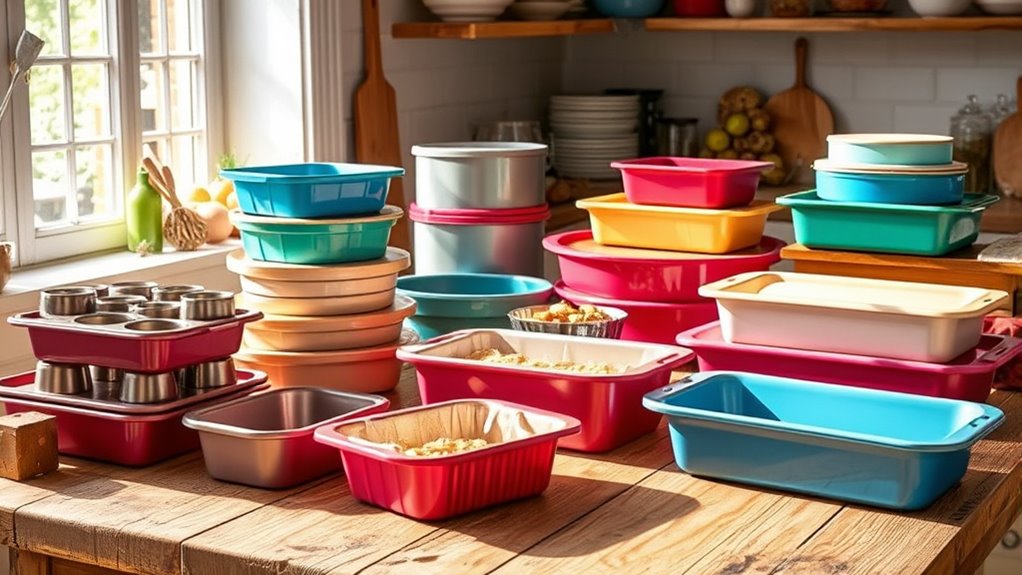
Baking Sheet
A baking sheet is an essential tool in any kitchen, whether you’re whipping up cookies or roasting vegetables.
It’s versatile and comes in handy for a variety of cooking tasks. When choosing the right baking sheet, keep the following in mind:
- Material: Opt for aluminum or stainless steel for even heating and durability.
- Size: Standard sizes are great, but consider larger sheets for bigger batches.
- Non-Stick Coating: Look for a non-stick surface to simplify cleanup and prevent sticking.
- Rimmed vs. Rimless: Rimmed sheets are great for liquids, while rimless ones allow easy cooling of baked goods.
Investing in a high-quality baking sheet will elevate your culinary creations!
Roasting Pan
Baking sheets lay the groundwork for many delicious dishes, but when it comes to preparing larger meals, a roasting pan is your best friend. It’s designed to accommodate big cuts of meat and hearty vegetables, allowing for even cooking and browning.
When you’re hosting a gathering or want to impress your family with a golden-brown roast, your roasting pan will be essential. Choose a sturdy, well-made pan that can withstand high temperatures while promoting heat distribution.
Its depth also prevents splatters, keeping your oven clean. Don’t forget to muse on size; a pan that fits snugly in your oven provides the best results.
A high-quality roasting pan not only enhances your home cooking but elevates your entertaining skills as well.
Sauté Pan
If you’re looking to elevate your cooking skills, a sauté pan is a must-have in your kitchen arsenal.
This versatile tool allows you to sear, sauté, and simmer with ease, making it perfect for everything from quick weeknight dinners to elaborate brunches. Its wide, flat base guarantees even heat distribution, while the tall sides prevent splatters.
Here are four key features to look for in a sauté pan:
- Material: Opt for stainless steel or nonstick surfaces for versatility.
- Size: A 3- to 5-quart pan is ideal for most recipes.
- Lid: A matching lid helps retain moisture and flavors.
- Handle: Look for a comfortable, heat-resistant handle for easy maneuvering.
With the right sauté pan, you’ll be cooking like a pro!
Pressure Cooker
Pressure cookers are game changers in the kitchen, allowing you to prepare meals in a fraction of the time compared to traditional methods.
Whether you’re cooking tough cuts of meat or beans, a pressure cooker locks in flavors and nutrients, turning an hour-long dish into a quick meal.
You’ll love how this versatile tool can be used for soups, stews, or even risottos with minimal effort. Plus, many models come with multiple settings, allowing you to customize your cooking experience.
Cleanup is a breeze since most are dishwasher-safe. Just imagine having a delicious, homemade meal on the table in record time!
Investing in a pressure cooker is a smart choice for any busy home cook looking to save time without sacrificing flavor.
Questions
What Materials Are Best for Eco-Friendly Cookware Options?
For eco-friendly cookware, consider options like stainless steel, cast iron, and ceramic. They’re durable, require less toxin release, and can often be recycled. Just make certain they’re free from harmful coatings to stay environmentally friendly.
How Do I Properly Maintain My Pots and Pans?
To maintain your pots and pans, always wash them with mild soap and a soft sponge. Avoid metal utensils or abrasive cleaners. Store them carefully to prevent scratches, and always let them cool before cleaning.
Can I Use Metal Utensils on Non-Stick Cookware?
If you’re cooking scrambled eggs with a metal spatula on non-stick cookware, you’re risking scratches. It’s best to avoid metal utensils to preserve the non-stick surface and guarantee longevity of your cookware.
What Size Pots and Pans Should I Buy for a Small Kitchen?
For a small kitchen, buy small to medium-sized pots and pans. A versatile 10-inch skillet, a 2-quart saucepan, and a larger stockpot should cover most cooking needs without overwhelming your limited space.
Are There Any Specific Safety Concerns With Certain Cookware Materials?
Yes, some cookware materials can pose safety concerns. For instance, non-stick coatings may release fumes if overheated, while aluminum can react with acidic foods. Stick to stainless steel or cast iron for safer options in cooking.