How to Organize Your Fridge for Maximum Freshness

To organize your fridge for maximum freshness, place food in the right temperature zones: keep leftovers and drinks on the top shelves, dairy in the middle, and veggies in the bottom drawers. Use clear containers for easy visibility and label everything with contents and dates. Regularly clean out expired items to maintain order and maximize space. Plus, manage leftovers creatively to reduce waste. Stick around to discover more tips on optimizing your fridge and keeping your food fresh!
Key Takeaways
- Place dairy products on the middle shelves for stable temperatures to maintain freshness.
- Store fruits and vegetables in separate crisper drawers to optimize humidity and prolong shelf life.
- Keep proteins like meat and fish on the bottom shelf to prevent cross-contamination and ensure safety.
- Use clear, stackable containers for easy visibility and organization, maximizing your fridge’s space.
- Regularly label and date food items to manage freshness and reduce waste through timely consumption.
Understanding Temperature Zones in Your Fridge
To keep your food fresh and safe, it’s essential to understand the temperature zones in your fridge. The top shelves are typically the warmest, ideal for leftovers and drinks.
The middle compartments maintain a moderate temperature, perfect for dairy products. The coolest part is usually the bottom drawers, designed for vegetables and fruits, ensuring they stay crisp.
The meat and fish drawer often has a slightly lower temperature, providing prime conditions for preserving freshness.
Finally, the door is the warmest area; it’s best for condiments and items that are less sensitive to temperature changes.
Familiarizing yourself with these zones helps you store food effectively, preventing spoilage and waste. Prioritizing temperature can make a noticeable difference in freshness and safety.
Strategic Placement of Foods for Optimal Freshness
While organizing your fridge, strategic placement of foods can greatly enhance their freshness and longevity.
Start by placing dairy products on the middle shelves, where the temperature remains stable. Condiments and sauces should go on the door, as these areas experience temperature fluctuations.
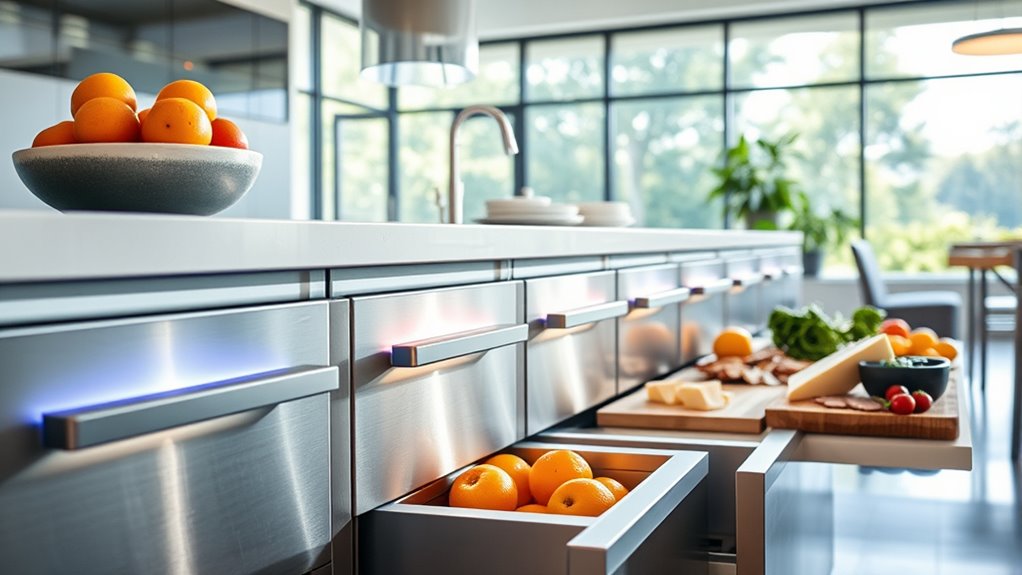
Keep your fruits and veggies in separate crisper drawers, as each requires different humidity levels—fruits do better in low humidity, while vegetables thrive in high humidity. Utilizing clear storage containers can also help to keep produce organized and visible.
Proteins like meat and fish should always go on the bottom shelf to avoid cross-contamination.
Additionally, understanding temperature zones is crucial for maintaining optimal freshness and ensuring that all types of food are stored in their appropriate environments.
Finally, make sure that any leftovers are placed towards the front so you can easily see and consume them before they spoil. Regularly checking expiration dates can further prevent waste and ensure quality.
Following these tips can keep your food fresher for longer!
Using Clear Containers for Easy Access and Visibility
Clear containers are a game-changer when it comes to fridge organization. They not only help you see what’s inside, but they also make accessing your food a breeze.
With clear containers, you won’t have to rummage through shelves, wasting time and letting cold air escape.
Here are some benefits of using them:
- Easy visibility: Spot your leftovers or snacks at a glance.
- Space-saving: Stackable designs maximize vertical space.
- Neatness: Keeps your fridge looking organized and tidy.
- Versatility: Use them for fruits, vegetables, or meal prep items. Additionally, using airtight seals can significantly enhance the freshness of your food items.
- Pantry organization can also apply to your fridge to maintain a streamlined space and freshness.
Labeling and Dating Your Food for Better Management
To keep your fridge organized, clear labeling and dating your food is essential. You’ll easily spot what you have and how long it’s been there, which helps prevent waste. Additionally, by following proper temperature zones for food storage, you can ensure that your meals remain fresh for a longer period. Remember to refrigerate or freeze leftovers promptly to reduce the risk of bacterial growth and ensure food safety.
Let’s explore some effective labeling practices and dating methods to keep your meals fresh.
Clear Labeling Practices
One simple yet effective way to enhance your fridge organization is through clear labeling practices. When you label your food, it’s easier to find what you need and manage freshness effectively.
Here’s how to get started:
- Use waterproof labels – They’ll withstand moisture and condensation.
- Include contents and purchase dates – Know exactly what’s inside and when it was bought.
- Keep it simple – Use large, legible fonts and clear descriptions to make reading easier.
- Color code items – Designate categories (like dairy, veggies, etc.) with different colored labels for quick access.
In addition, regular cleaning is essential as it prevents spoilage and reduces unpleasant odors. With these practices, you’ll save time and reduce food waste, keeping your fridge organized and your food fresher longer!
Dating Methods for Freshness
Effective dating methods are essential for maintaining freshness and preventing food waste in your fridge. Start by labeling your items with the date of purchase or preparation. Use masking tape and a permanent marker to make it easy to see.
For frozen foods, consider adding a “best by” or expiration date to help you track freshness. You can also rotate older foods to the front so you use them first. Additionally, using airtight containers can further support your efforts in keeping food fresh by reducing air exposure.
Check your fridge weekly to discard items past their date or that show signs of spoilage. Remember, the clearer your dating system, the easier it’s to manage what you have and keep your fridge organized. Regular cleaning of the fridge, including cleaning the coils, can also enhance its efficiency and keep your food fresher for longer.
Keeping things fresh not only saves money but boosts your meal prep efficiency.
The Importance of Regular Cleaning and Decluttering

While it might seem like a mundane task, regularly cleaning and decluttering your fridge is essential for maintaining a healthy kitchen environment.
Regularly cleaning and decluttering your fridge is vital for a healthy kitchen and a more organized home.
A clean fridge not only looks better but also helps you keep track of what you have, preventing spoilage and waste. It promotes food safety by minimizing the risk of contamination, making sure your family stays healthy.
Here are some reasons to prioritize this task:
- Removes expired or spoiled items
- Reduces odors and bacteria growth
- Maximizes available space for new groceries
- Encourages mindful food storage habits
Additionally, incorporating eco-friendly food storage options can further enhance your efforts in reducing waste and promoting sustainability.
Tips for Managing Leftovers and Avoiding Waste
Managing leftovers can be a breeze with a few simple strategies.
Using proper storage containers and labeling items with dates will make it easy to keep track of what you have.
Plus, planning your weekly meals helps guarantee you use ingredients before they go bad, reducing waste.
Proper Storage Containers
Choosing the right storage containers can make a significant difference in how you manage leftovers and reduce waste.
You’ll want to opt for containers that are durable, airtight, and microwave-safe. Here are some tips to keep in mind:
- Glass or BPA-free plastic: These materials are safe and won’t leach harmful chemicals.
- Different sizes: Having various sizes makes it easier to store everything from a single serving to a pot of soup.
- Stackable designs: Look for containers that can be stacked to maximize fridge space.
- Transparent materials: Clear containers let you see what’s inside at a glance, helping you avoid forgotten food.
Label and Date Items
Even with the right storage containers, leftovers can easily get lost in the fridge if you don’t keep track of them. To avoid waste, label and date everything you store. This simple practice not only helps you remember what’s inside but also keeps your meals fresh.
| Emotional Reminder | Action Item |
|---|---|
| Don’t let food go to waste! | Label your items now. |
| Freshness fades fast! | Date every container. |
| Save time and money! | Use it before it spoils! |
Plan Weekly Meals
While planning your weekly meals, you can significantly reduce food waste by strategically incorporating leftovers into your menu. This not only saves you money but also keeps your fridge organized and fresh.
Here are some tips for managing those leftovers:
- Create a “leftover night” to use up any extra food.
- Transform ingredients into new dishes, like turning roasted veggies into a frittata.
- Utilize proper storage: keep leftovers in clear, labeled containers for easy access.
- Plan meals around perishables first, like using greens or fruits that might spoil quickly.
Questions
How Can I Prevent My Fridge From Smelling Bad?
To keep your fridge fresh like a blooming garden, regularly check for expired items, use baking soda to absorb odors, and maintain proper ventilation. Clean spills promptly, and make certain strong scents are sealed tightly.
Is It Safe to Store Eggs in the Fridge Door?
It isn’t safe to store eggs in the fridge door. The temperature fluctuates more there, so keep them on a middle shelf instead. This helps maintain their freshness and reduces the risk of spoilage.
How Often Should I Clean My Fridge?
You should clean your fridge every three to four months. Regularly check for expired items and spills, too. Keeping it clean helps maintain freshness and prevents odors from developing, ensuring your food stays safe and appetizing.
Can I Store Fruits and Vegetables Together?
You can’t just throw fruits and veggies together willy-nilly! Some fruits release ethylene gas, which can spoil vegetables quicker. It’s best to keep them separate to guarantee everything stays fresh longer. It’s a modern-day fridge dilemma!
What’s the Best Way to Organize Condiments?
Group similar condiments together, like dressings with dressings and sauces with sauces. Keep frequently used items in the front for easy access. Regularly check expiration dates and toss anything that’s past its prime.