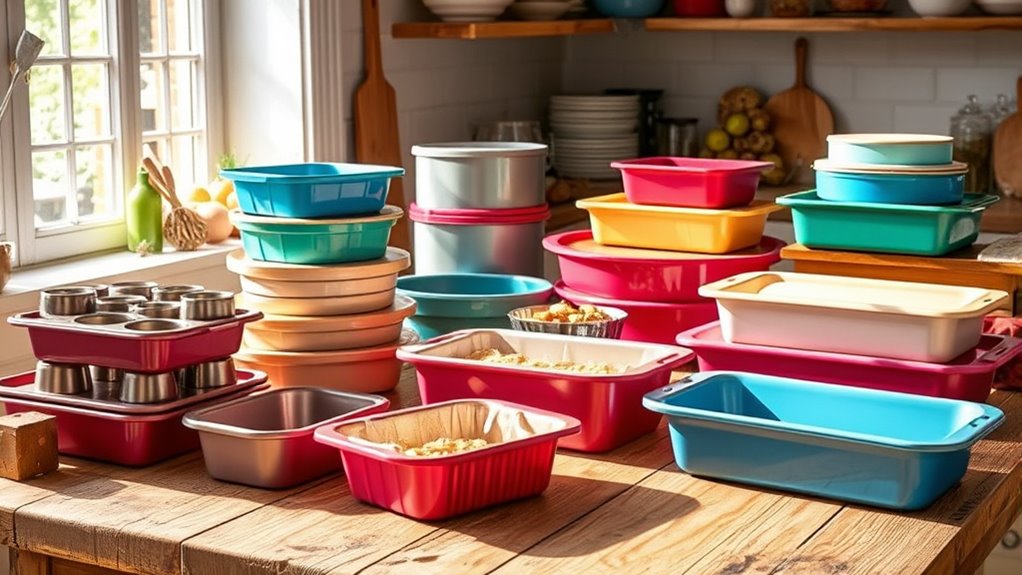
How to Clean and Maintain Your Bakeware

To clean and maintain your bakeware, always let it cool completely before washing. Use warm, soapy water with a non-abrasive sponge for general cleaning. Stubborn stains can be tackled with a baking soda paste or a vinegar soak. For specific materials, like glass or silicone, follow tailored cleaning techniques to avoid damage. Also, store bakeware correctly to prevent scratches. If you’d like to know more about specific care methods for different bakeware types, keep going!
Key Takeaways
- Always allow bakeware to cool completely before washing to prevent warping.
- Use warm, soapy water and a soft sponge for regular cleaning, avoiding abrasives.
- For tough stains, apply a baking soda paste and let it sit before scrubbing.
- Hand wash glass bakeware and avoid dishwashers unless specified safe by the manufacturer.
- Regularly check for damage and replace any bakeware that shows signs of wear for optimal performance.
Understanding Different Types of Bakeware
When you’re choosing bakeware, it’s essential to understand the different types available, since each serves a unique purpose.
For instance, metal pans heat up quickly, making them ideal for cookies and cakes, while glass or ceramic varieties retain heat, offering excellent results for casseroles and pie baking. Additionally, it’s important to note that proper cleaning techniques can help prolong the life of your metal and glass bakeware.
Silicone bakeware is flexible and easy to clean but may require special care to avoid sticking.
If you’re often baking bread, consider using a stoneware option, as it helps create that crispy crust you crave.
Finally, don’t forget about specialty pans, like muffin tins or bundt molds, which can elevate your baking game. Selecting the right bakeware sets the foundation for your culinary creations, ensuring delicious outcomes. Additionally, understanding the benefits of versatile bakeware will enhance your ability to tackle a variety of recipes with ease.
General Cleaning Tips for All Bakeware
Cleaning bakeware might seem overwhelming, but it doesn’t have to be a chore. Start by letting your bakeware cool completely before washing it; this helps prevent warping.
Cleaning your bakeware is simple! Allow it to cool before washing to avoid warping.
For most bakeware, warm, soapy water is your best friend. Grab a non-abrasive sponge to avoid scratches. If you encounter stubborn stains, try soaking the bakeware for a while.
Baking soda is a natural cleaner—you can create a paste with water and gently scrub the tough spots. Rinse thoroughly and dry properly to prevent moisture retention. Regular cleaning is essential to prevent cross-contamination and maintain hygiene in your kitchen.
Avoid putting your bakeware in the dishwasher unless the manufacturer specifies it’s safe. Finally, store your bakeware carefully, stacking them with protective liners to prevent scratches and damage.
Happy baking and cleaning!
Specific Cleaning Techniques for Metal Pans
When it comes to cleaning metal pans, using the right scrubbing techniques makes all the difference.
You’ll want to know how to tackle stubborn stains that just won’t budge.
Let’s explore effective methods to keep your metal bakeware looking its best.
Scrubbing Techniques for Metal
Although metal pans are durable, they can still accumulate stubborn grease and residue, making effective scrubbing essential for maintaining their performance. Start by using a non-abrasive sponge or cloth to protect the pan’s surface.
For light cleaning, warm soapy water usually does the trick—simply soak your pan for a few minutes before scrubbing gently.
If you’re dealing with tougher grime, consider a mixture of baking soda and water to create a paste. Apply it to the affected areas, let it sit for a while, then scrub with a soft brush.
Always rinse thoroughly and dry immediately to prevent water spots. By using these scrubbing techniques, you’ll keep your metal pans in top shape for all your baking endeavors.
Removing Stubborn Stains
If you’ve ever faced stubborn stains on your metal pans, you know how frustrating it can be. To tackle those tough spots, start by creating a paste of baking soda and water. Apply it directly to the stains and let it sit for about 30 minutes.
For even tougher residues, sprinkle some salt over the paste for added abrasiveness.
Afterward, scrub gently with a non-abrasive sponge. If stains persist, consider using white vinegar. Heat a mixture of equal parts vinegar and water in the pan, and once it’s warm, scrub the area again.
For the best results, make sure to rinse thoroughly and dry the pans after cleaning to prevent any moisture-related stains in the future.
Caring for Glass Bakeware
Caring for your glass bakeware is essential to guarantee its longevity and performance in the kitchen. Always let your glass bakeware cool down before rinsing it. Sudden temperature changes can cause it to crack or shatter.
Use mild dish soap and a soft sponge or cloth to clean it; avoid abrasive cleaners or scouring pads, as these can scratch the surface. If you face tough stains, soak it in warm, soapy water before cleaning.
For gentle cleaning, opt for mild dish soap and a soft sponge; avoid abrasives to keep your glass bakeware scratch-free.
It’s also best to hand wash your glass bakeware, as the dishwasher’s intense heat can lead to thermal shock. Store it carefully, stacking pieces with cloth or paper towels in between to prevent scratches.
Treat your glass bakeware right, and it’ll reward you with years of culinary success.
Proper Maintenance for Silicone Bakeware

When it comes to silicone bakeware, proper cleaning and storage are key to keeping it in great condition.
You’ll want to use specific cleaning techniques to prevent damage and guarantee its longevity.
Plus, knowing how to store your silicone items can make a big difference in their lifespan.
Cleaning Techniques to Use
Cleaning silicone bakeware requires a few simple techniques to keep it in top shape and ready for your next culinary adventure.
Whether you’re making gooey brownies or delightful muffins, these tips will make cleanup a breeze:
- Rinse Immediately: After use, rinse your bakeware with hot water to prevent food from drying on.
- Use Soft Sponge: Avoid abrasive scrubbers; instead, opt for a soft sponge to gently remove residue.
- Baking Soda Paste: For stubborn stains, mix baking soda with a bit of water to form a paste. Apply and let sit before washing.
- Dishwasher Safe: Feeling lazy? Most silicone bakeware is dishwasher safe; just place it on the top rack!
Keeping your bakeware clean guarantees you can enjoy your favorite recipes hassle-free!
Storage Tips for Longevity
To guarantee your silicone bakeware lasts for years, proper storage is essential.
Start by ensuring your bakeware is completely clean and dry before storing it. Avoid stacking heavy items on top of silicone, as this can cause misshaping over time.
Instead, store your bakeware flat or hang it if possible. If you need to stack, separate each piece with a paper towel or cloth to prevent sticking.
Avoid storing it in direct sunlight or near heat sources, which can degrade the material.
Additionally, keep your bakeware away from sharp objects that could cut or puncture it.
With these tips, you’ll maintain the flexibility and durability of your silicone bakeware for countless baking sessions to come.
Avoiding Common Mistakes in Bakeware Care
While it might seem simple, taking care of your bakeware often involves pitfalls that can lead to damage or poor baking results. You might think you’re doing everything right, yet a few common mistakes could ruin your favorite pans. Here’s what to avoid:
- Using metal utensils – They can scratch and ruin non-stick surfaces, making your bakeware tricky to use.
- Skipping preheating – Putting cold bakeware in a hot oven can cause sudden temperature changes and cracks.
- Overloading with batter – This can overflow and stick, creating a mess that’s tough to clean.
- Neglecting to dry – Leaving wet bakeware can lead to rusting, especially with metal pans.
Storing Your Bakeware Correctly
Proper care of your bakeware doesn’t end after washing it; how you store it plays a big role in its longevity and performance.
First, stack your bakeware with care. If you’re stacking metal pans, place a protective layer, like a paper towel or cloth, between them to prevent scratches. For glass or ceramic pieces, consider using a dish rack to keep them upright and safe from chipping. Using the right materials for food storage, such as glass or silicone containers, can also help in maintaining freshness.
Avoid placing heavy items on top of lighter bakeware to prevent warping. Additionally, storing bakeware in a cool, dry place helps to keep it in top condition, so steer clear of areas near heat sources. Regular cleaning appliances contributes significantly to their performance and lifespan, so remember to check and maintain your bakeware as part of your kitchen routine.
Reviving Old or Stained Bakeware
Reviving old or stained bakeware doesn’t have to be thrown out; with a few simple steps, you can bring it back to life.
Reviving your cherished bakeware not only saves money but also brings back fond memories of baking with loved ones.
Here’s how you can do it:
- Baking Soda Paste: Mix baking soda and water to create a paste. Apply it to the stained areas and let it sit for 15 minutes before scrubbing.
- Vinegar Soak: Submerge the bakeware in a vinegar and water solution for an hour to lift stubborn stains.
- Lemon Juice: For extra freshness, scrub the bakeware with lemon juice; it brightens and smells amazing.
- Oven Cleaner: For tough stains, a mild oven cleaner can be effective; just be sure to rinse thoroughly.
Incorporating innovative cleaning gadgets, such as robotic vacuums, can further enhance your cleaning routine, making it easier to maintain a pristine kitchen environment.
Questions
Can I Use Metal Utensils on Non-Stick Bakeware?
No, you shouldn’t use metal utensils on non-stick bakeware. They can scratch the coating, reducing its effectiveness and lifespan. Instead, opt for silicone or wooden utensils to keep your bakeware in great condition.
How Often Should I Replace My Bakeware?
You should replace your bakeware every few years, or sooner if you notice significant wear. It’s amazing how a simple upgrade can rekindle your baking enthusiasm, making it feel like you’re creating something truly special again.
Can Dishwasher Use Damage My Bakeware?
Yes, dishwashers can damage your bakeware over time. High heat and harsh detergents might cause warping, discoloration, or scratching. It’s safer to hand wash, ensuring your bakeware lasts longer and maintains its quality.
What Should I Do for Burnt-On Food?
Nearly 70% of home cooks face burnt-on food at some point! To tackle it, soak your bakeware in hot, soapy water, then scrub gently with a non-abrasive sponge for effective removal without damage.
Is It Safe to Use Damaged Bakeware?
No, it’s not safe to use damaged bakeware. Cracks or chips can lead to further breakage or uneven cooking. You should replace any damaged pieces to guarantee both your safety and the quality of your baking.