Knife Care 101: How to Sharpen and Store Safely

Proper knife care is essential for kitchen safety and efficiency. You need to know the signs that your knife’s dull, like resistance while cutting. Sharpening can be done using sharpening stones or manual sharpeners, maintaining a consistent angle. After sharpening, remember to clean and hone your knives regularly. Store them safely in a knife block or on a magnetic strip to protect their edges. There’s even more to learn about enhancing your knife’s longevity.
Key Takeaways
- Regularly check for signs of dullness, like resistance while cutting or uneven cuts, indicating a need for sharpening.
- Use either electric sharpeners for quick results or manual sharpeners for greater control and precision.
- Maintain a consistent sharpening angle of around 20 degrees, using appropriate grit for best results.
- Store knives in a knife block, on a magnetic strip, or with blade guards to protect their edges and ensure safe access.
- Clean knives after use and ensure they are completely dry before storage to prevent rust and maintain sharpness.
Understanding the Importance of Knife Care
When you think about it, proper knife care is crucial for both safety and efficiency in the kitchen. A dull knife can be dangerous, as it requires more force to cut, increasing the risk of slipping and causing injuries. Understanding the anatomy of a chef’s knife can also help you appreciate the importance of each component in maintaining its sharpness.
Taking the time to maintain your knives not only keeps them sharp but also enhances your cooking experience. Clean your knives right after use to prevent rust and odors, and always store them properly to protect their edges. Using a cutting board can also prolong their lifespan.
Maintaining your knives enhances your cooking, preventing rust and prolonging their lifespan with proper cleaning and storage.
Regular maintenance, like sharpening and oiling, guarantees your knives perform their best. By understanding and prioritizing knife care, you’re investing in both your safety and culinary success. Proper knife care techniques are essential for extending the life and functionality of your knives.
It’s a small effort that pays off greatly in the long run.
Different Types of Knives and Their Uses
Here’s a quick overview of three common types:
- Chef’s Knife: This versatile workhorse is perfect for chopping, dicing, and mincing. Its wide blade enables smooth slicing through various ingredients.
- Paring Knife: Ideal for intricate tasks, this small knife excels at peeling fruits and vegetables, as well as precision cutting.
- Serrated Knife: Often used for bread, its saw-like edge makes slicing through crusty surfaces effortless, preventing squishing or tearing. Understanding the specific uses of these knives is crucial for efficient meal preparation.
Signs That Your Knife Needs Sharpening
Have you ever noticed that your knife feels dull when you’re cutting? If you find it tough to slice through ingredients, it’s a clear sign that your knife needs sharpening. Recognizing these signs can help you keep your kitchen tools in top shape, including proper sharpening methods to restore their functionality.
Dull Edge Feel
A dull edge can turn a simple kitchen task into a frustrating experience. You might notice several signs that indicate it’s time to sharpen your knife.
Here are three key indicators to watch for:
- Resistance When Cutting: If you feel like you’re pushing too hard, your knife’s edge may be dull.
- Uneven Cuts: If your slices aren’t as smooth or consistent, it’s a sign your knife isn’t performing well.
- Increased Pressure: If you find yourself applying more pressure than usual, your knife likely needs a touch-up.
Recognizing these signs early can save you time and effort in the long run.
Don’t let a dull edge ruin your culinary experience; keep your knives sharp for top-notch performance!
Difficulty Cutting Through
When you’re struggling to slice through even the softest ingredients, it’s likely your knife needs sharpening.
If you’re applying more pressure than usual or having to saw back and forth like you’re wrestling with the food instead of slicing it, that’s a clear sign. A sharp knife should make clean cuts with minimal effort, so if you’re experiencing frustration or fatigue while prepping meals, check your blade.
Also, if you notice tearing or squashing instead of a smooth cut, that’s another indicator of dullness. Regular cleaning and disinfecting of your cutting boards can also help maintain the longevity of your knives and improve your overall kitchen hygiene.
Don’t forget, maintaining a sharp knife not only makes cooking easier but also enhances your precision and safety in the kitchen.
When in doubt, it’s always better to sharpen before you slice!
Basic Knife Sharpening Techniques
When it comes to keeping your knife sharp, you’ll want to know a couple of key techniques.
Using sharpening stones and honing rods can make a big difference in maintaining your blade’s edge.
Let’s take a closer look at how to use both tools effectively. Additionally, understanding the advantages of knife storage options can ensure your knives remain in optimal condition between uses.
Using Sharpening Stones
Though it may seem intimidating at first, using sharpening stones is an effective way to keep your knives in top shape. The process isn’t as complex as it sounds; with a bit of practice, you’ll be a pro in no time.
Here’s how to get started:
- Choose the Right Grit: Different grits serve various purposes. Use coarse grit for repairing edges and fine grit for honing.
- Angle Matters: Hold your knife at a consistent angle—around 20 degrees is ideal for most kitchen knives.
- Use Water or Oil: Depending on the type of stone, lubricate it with water or oil to prevent damage and assist in sharpening.
Follow these steps, and you’ll enjoy sharper, more efficient knives in your kitchen!
Employing Honing Rods
A honing rod is an essential tool for maintaining your knives between sharpenings. It realigns the edge of your blade, helping it stay sharp without removing much material.
To use it, hold the rod vertically, with the tip resting on a sturdy surface. Grip your knife at a 15 to 20-degree angle to the rod. Starting at the base of the blade, draw it down the rod in a smooth motion, applying light pressure.
Alternate sides after each stroke, making sure to maintain the angle for an even finish. A few swipes on each side is usually enough.
After honing, your knife should feel sharper and ready for action, ensuring safe and effective cutting.
Using a Sharpening Stone: Step-by-Step Guide

While keeping your knives sharp is essential for efficient cooking, using a sharpening stone can seem intimidating at first. However, with a bit of practice, it’s straightforward.
Keeping your knives sharp is crucial for cooking efficiency, and mastering a sharpening stone is easier than you think.
Here’s a step-by-step guide to help you master the technique:
- Wet the Stone: Soak your sharpening stone in water for about 10-15 minutes. This helps to create a slurry that aids sharpening.
- Angle Your Blade: Hold your knife at a 20-degree angle to the stone. This is important for an effective sharpening process.
- Sharpen: Slide the blade across the stone, applying gentle pressure. Go from the heel to the tip, sweeping it down and back up, alternating sides for about 5-10 passes each.
With these steps, you’ll soon feel confident in using your sharpening stone!
Electric vs. Manual Sharpeners: Which Is Right for You?
When it comes to sharpening your knives, you’ll find yourself choosing between electric and manual sharpeners.
Each option offers its own ease of use, sharpening precision, and maintenance requirements.
Think about what matters most to you, and let’s explore which might be the best fit for your needs.
Ease of Use
Choosing between electric and manual sharpeners can feel overwhelming, especially with the variety of options available.
To make your decision easier, consider these points:
- Convenience: Electric sharpeners offer quick results; you can sharpen your knife in seconds with minimal effort.
- Control: Manual sharpeners let you feel the blade and adjust pressure, giving you a hands-on approach to sharpening.
- Cost: Typically, manual options are more budget-friendly, while electric models can be pricier but may last longer.
Weigh these factors based on your kitchen habits and preferences.
If you’re short on time, an electric sharpener might suit you best.
However, if you enjoy the craftsmanship of knife care, a manual option could be a rewarding choice.
Sharpening Precision
Sharpening precision is a key factor in maintaining your knives, and understanding the differences between electric and manual sharpeners can make all the difference.
If you’re looking for ease and speed, an electric sharpener might be your best bet. It quickly hones blades with uniformity, but it may remove more material than necessary, shortening the lifespan of your knife.
On the other hand, manual sharpeners require a bit more effort, but they offer greater control. You can adjust the angle, adapting to the specific knife you’re using. This method enhances precision, allowing you to maintain the blade’s integrity.
Ultimately, it comes down to your comfort level and sharpening needs—choose wisely to keep your knives performing at their best!
Maintenance Requirements
Maintaining your knives goes beyond just sharpening; it involves considering the upkeep of your sharpening tools as well.
When deciding between electric and manual sharpeners, think about your preferences and needs. Here’s a quick guide to help you:
1. Electric Sharpeners: They’re easy to use and provide consistent results.
However, they require regular cleaning to prevent buildup and mightn’t work well on all blade types.
2. Manual Sharpeners: These offer better control and can be gentler on your knives.
You’ll need to sharpen them regularly, and they require occasional maintenance to keep the stones or surfaces in good condition.
3. Versatility: Consider how often you’ll use the sharpener.
If you have various knives, you might want a tool that accommodates different styles.
How to Maintain a Knife After Sharpening
After sharpening your knife, it’s essential to give it the right care to guarantee its longevity and performance. First, wipe the blade with a soft, damp cloth to remove any metal shavings or debris. Avoid using harsh detergents or abrasive materials that can damage the finish.
Ensure your knife’s longevity by wiping it clean and avoiding harsh detergents after sharpening.
Next, regularly hone your knife with a honing steel to maintain its edge between sharpenings. This helps realign microscopic teeth that may have bent during use.
When using your knife, avoid cutting on hard surfaces like glass or stone, as this can dull the edge quickly.
Finally, always wash and dry your knife immediately after use, ensuring it’s dry before storing. This prevents rust and keeps the blade in top shape for years to come.
Safe Storage Solutions for Your Knives
How can you guarantee your knives stay safe and sharp when not in use? Storing your knives properly is essential to maintaining their longevity and sharpness.
Here are three effective storage solutions:
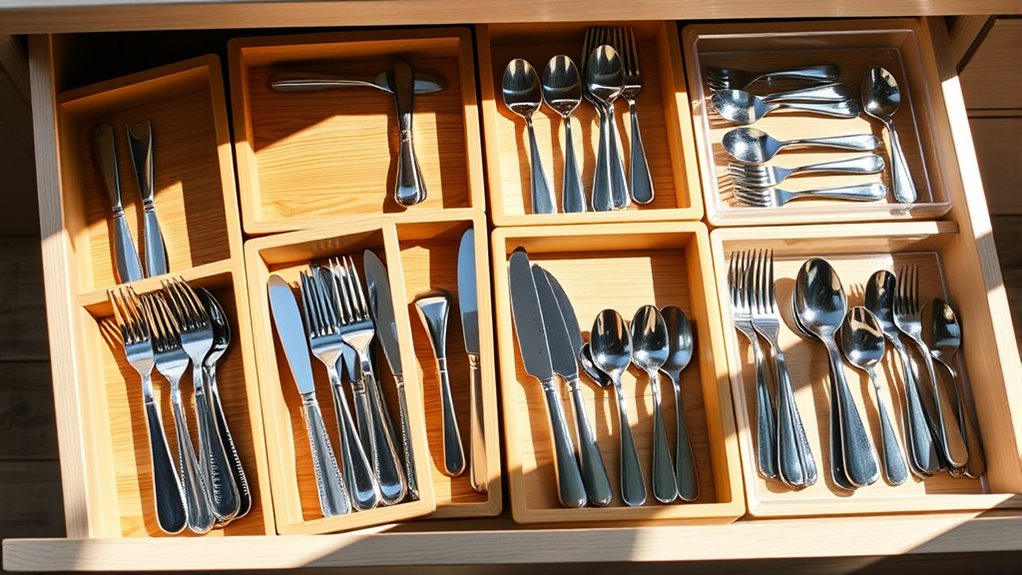
- Knife Block: A wooden or acrylic knife block keeps your blades protected and organized. It also prevents accidental cuts.
- Magnetic Strips: Wall-mounted magnetic strips not only save counter space but display your knives attractively while keeping them easily accessible.
- Blade Guards: If you prefer drawer storage, use blade guards to cover the edges. This won’t just protect the blades from dulling; it also keeps you safe from unexpected cuts.
Cleaning and Caring for Your Knives
Proper care and cleaning of your knives can greatly extend their lifespan and performance.
After each use, make certain to wash them by hand with warm, soapy water. Avoid soaking them or placing them in the dishwasher, as this can damage their edges and handles.
Dry your knives immediately with a soft cloth to prevent rust and moisture damage. For stubborn stains, use a gentle sponge or a non-abrasive cleaner.
Regularly inspect the blades for any signs of damage or dullness. If you notice any rust, use a mild abrasive and then treat the blade with a little mineral oil.
Tips for Enhancing Knife Longevity
Maintaining your knives doesn’t stop at cleaning; there are several additional steps you can take to enhance their longevity.
By following these tips, you’ll guarantee your knives remain in top condition for years to come.
- Use a Cutting Board: Always cut on a soft surface like wood or plastic to prevent dulling the blade. Avoid glass or marble.
- Hand Wash and Dry: Skip the dishwasher. Instead, hand wash your knives with mild soap and warm water, then dry them immediately to prevent rust.
- Store Properly: Utilize a knife block, magnetic strip, or blade guard to keep your knives safe and secure.
This prevents blade-chipping and reduces the risk of accidental cuts.
With these practices, your knives will serve you well!
Questions
Can I Use My Knife for Cutting Frozen Food?
You shouldn’t use your knife for cutting frozen food. It can damage the blade and lead to accidents. Instead, let the food thaw slightly, or use a suitable tool designed for frozen items. Stay safe!
What Is the Best Material for Knife Handles?
You know what they say, “A good grip keeps the cut clean.” For knife handles, the best materials are wood, stainless steel, and high-quality plastics, as they offer durability and comfort for precise cutting.
How Often Should I Sharpen My Knives?
You should sharpen your knives every few months, or whenever they start feeling dull. Regular maintenance, based on usage, will keep them performing well. Trust your instincts—if they don’t slice well, it’s time to sharpen!
Are Ceramic Knives More Fragile Than Steel Knives?
Yes, ceramic knives are generally more fragile than steel knives. While they can stay sharp longer, you’ll need to handle them carefully to avoid chipping or breaking, especially during rigorous tasks or improper storage.
Can I Use a Honing Rod for Serrated Knives?
No, you can’t use a honing rod for serrated knives. Honing rods are designed for straight blades. For serrated knives, it’s best to use a specialized sharpening tool or take them to a professional.