How to Clean and Disinfect Cutting Boards

To clean and disinfect your cutting boards, scrub them with hot, soapy water right after use, then rinse thoroughly. For disinfection, use a bleach solution, vinegar, or hydrogen peroxide. Avoid soaking boards to prevent damage. Make sure your cutting boards are completely dry before storing them upright in a designated area. Regular maintenance extends their lifespan, and if you notice deep grooves or persistent odors, it’s time for a replacement. There’s more to keeping them safe and hygienic!
Key Takeaways
- Clean cutting boards promptly after each use with hot, soapy water and a sponge for effective germ removal.
- Sanitize with diluted vinegar or food-safe sanitizer after rinsing to eliminate lingering bacteria.
- For deep cleaning, use a bleach solution, letting it soak before rinsing thoroughly.
- Avoid soaking cutting boards to prevent warping and damage over time.
- Regularly inspect boards for deep grooves or scratches; replace if they cannot be cleaned effectively.
Understanding the Importance of Cleaning Cutting Boards
While you mightn’t think about it often, cleaning your cutting boards is vital for maintaining a safe kitchen. Germs and bacteria can linger on these surfaces, especially after cutting raw meat or vegetables.
If you don’t clean them properly, cross-contamination can occur, leading to foodborne illnesses. You might be surprised to learn that even seemingly harmless ingredients can introduce harmful pathogens.
Regularly cleaning your cutting boards helps prevent the buildup of unpleasant odors and stains, too. It’s not just about hygiene; a clean cutting board can enhance your cooking experience. This includes using effective disinfectant methods, which can drastically reduce the risk of contamination.
Regularly cleaning cutting boards not only maintains hygiene but also elevates your overall cooking experience.
Taking a few moments to disinfect between uses can guarantee you’re preparing food in a safe environment. So, don’t underestimate the importance of this simple yet vital task!
Different Types of Cutting Boards: Wood vs. Plastic
When it comes to choosing a cutting board, you’ve got two popular options: wood and plastic.
Each type has its own benefits and requires different care to keep them in top shape.
Let’s explore the pros of each so you can make the best choice for your kitchen.
Pros of Wood Boards
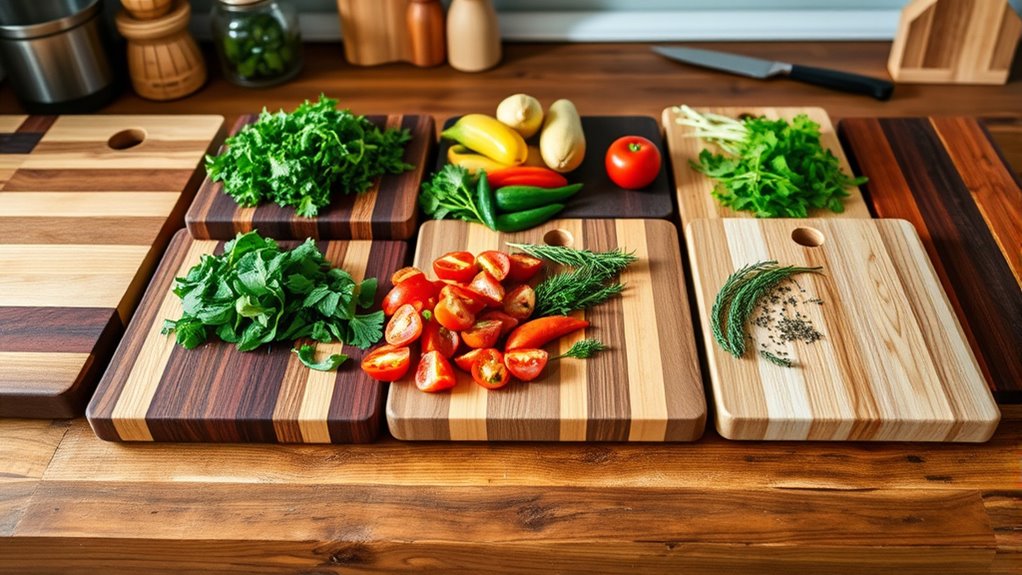
Although you may be tempted to choose plastic, wood cutting boards offer several distinct advantages that make them a worthwhile option in the kitchen. First, they’re gentler on your knife blades, keeping them sharper for longer. Second, wood boards possess natural antibacterial properties, which help reduce the risk of contamination. Additionally, using a quality knife on a wood board can enhance the overall cooking experience. Finally, they provide a beautiful, rustic aesthetic that enhances your kitchen decor. Additionally, when well cared for, wood cutting boards can last many years and improve their antimicrobial qualities over time.
| Advantage | Description | Visual Appeal |
|---|---|---|
| Knife-friendly | Less wear on blades | Smooth surface |
| Antimicrobial | Natural bacteria resistance | Rich wood grain |
| Aesthetic Appeal | Adds warmth and character to your kitchen | Unique patterns and colors |
Choosing a wood cutting board means prioritizing both functionality and style.
Advantages of Plastic Boards
Plastic cutting boards offer several practical advantages that can make them a great choice for your kitchen. They’re known for being lightweight and easy to handle, which can simplify your meal prep.
Plus, they come in a variety of colors and sizes, allowing you to choose one that fits your needs.
Here are a few key benefits of plastic boards:
- Non-porous surface: They resist bacteria and odors, making them more hygienic for food prep. Regular maintenance and proper cleaning techniques are necessary to maximize their effectiveness.
- Dishwasher-safe: Cleaning is a breeze since you can toss them in the dishwasher for thorough sanitation.
- Cost-effective: Generally, plastic boards are more affordable than wood options, allowing for easy replacements when needed.
Choosing plastic can be a smart, practical addition to your kitchen tools! Additionally, proper cleaning techniques are essential to maintain the board’s surface and prevent contamination.
Maintenance and Care Tips
Cutting boards come in various materials, but wood and plastic require different maintenance and care techniques to guarantee their longevity. For wood boards, it’s essential to regularly oil them with food-safe mineral oil to prevent cracking and warping. Avoid soaking them in water and always handwash instead of using a dishwasher. On the other hand, plastic boards are dishwasher safe and can be cleaned with hot, soapy water. However, they should be replaced once they show deep grooves or cuts.
| Material | Cleaning Method | Maintenance Tips |
|---|---|---|
| Wood | Handwash only | Oil regularly with mineral oil |
| Plastic | Dishwasher safe | Replace when grooved or scratched |
| Both | Disinfect with vinegar | Avoid soaking in water |
Daily Cleaning Routine for Cutting Boards
A simple daily cleaning routine can keep your cutting boards in top shape and free from harmful bacteria.
After using your cutting board, it’s essential to clean it promptly. Here’s how you can do it effectively:
Cleaning your cutting board promptly after use is crucial for maintaining hygiene and preventing harmful bacteria.
- Scrub with hot, soapy water: Use a sponge or cloth to remove food residues. Rinse thoroughly afterward.
- Sanitize: Once rinsed, you can apply a diluted solution of vinegar or a food-safe sanitizer to kill any lingering germs.
- Dry properly: Use a clean towel to dry the board or let it air dry standing up. Avoid soaking your board in water, as this can warp it over time.
Deep Cleaning Techniques for Stubborn Stains

After you’ve established a daily cleaning routine, you might still encounter stubborn stains that refuse to budge. To tackle these, try a paste of baking soda and water. Apply it to the stained area, let it sit for about 10 minutes, then scrub gently with a sponge.
If that doesn’t work, you can use a mixture of equal parts vinegar and water. Spray it directly on the stain, allow it to sit for a few moments, and wipe it off.
For tough, ingrained stains, consider using a lightly abrasive scrub pad—just be careful not to damage your board.
Finally, lemon juice can work wonders; rub half a lemon over the stain, sprinkle salt on top, then scrub for extra cleaning power.
Effective Disinfecting Methods for Cutting Boards
While it’s important to keep your cutting board clean, proper disinfection is essential to prevent the spread of bacteria.
There are several effective methods you can use to disinfect your cutting board, ensuring it stays safe for food preparation.
- Bleach Solution: Mix one tablespoon of unscented liquid chlorine bleach with a gallon of water. Soak or wipe your board with it, then rinse thoroughly.
- Vinegar: Spray undiluted white vinegar on the board. Let it sit for a few minutes before rinsing.
- Hydrogen Peroxide: Apply 3% hydrogen peroxide directly to the surface. Allow it to sit for a few minutes, then rinse well.
Choose one of these methods regularly to keep your cutting board sanitized and safe for your kitchen tasks.
Tips for Maintaining Your Cutting Boards

To keep your cutting boards in great shape, it’s important to follow proper cleaning techniques and regular maintenance practices.
You’ll also want to think about safe storage solutions to prevent damage.
Let’s explore these tips to guarantee your cutting boards last longer and stay in top condition.
Proper Cleaning Techniques
Since cutting boards come into direct contact with raw foods, maintaining their cleanliness is crucial for food safety. To effectively clean your boards, follow these proper techniques:
- Wash with hot, soapy water: After each use, scrub your board with warm, soapy water to remove food particles and bacteria. Rinse thoroughly.
- Use a sanitizing solution: For an extra layer of protection, you can use a mixture of 1 tablespoon of bleach in 1 gallon of water. Let it sit for a few minutes before rinsing and drying.
- Air dry properly: Always allow your cutting board to air dry completely before storing it to prevent moisture buildup that can lead to bacterial growth.
Keeping your cutting boards clean will help maintain food safety in your kitchen.
Regular Maintenance Practices
Maintaining your cutting boards is essential for their longevity and hygiene, especially if you want to keep your food prep safe.
Start by regularly checking for deep grooves or cracks, as these can harbor bacteria. If you notice any damage, it might be time to replace the board.
After each use, wash your board with warm soapy water and dry it thoroughly. To keep it in top shape, apply mineral oil every few weeks to prevent drying and cracking.
Make it a habit to inspect your board monthly, and don’t forget to give it a thorough deep clean every few months.
Safe Storage Solutions
Proper storage is essential for keeping your cutting boards in top condition and preventing damage. By following some simple tips, you can extend their lifespan and maintain their cleanliness.
- Avoid overcrowding: Store cutting boards vertically or on a designated rack to prevent scratches and warping.
- Keep them dry: Make certain boards are completely dry before storage to prevent mold and bacteria growth.
- Use protective covers: If possible, consider using a breathable cover to shield the boards from dust while allowing airflow.
Signs It’s Time to Replace Your Cutting Board
While a well-cared-for cutting board can last for years, there are clear signs that indicate it’s time for a replacement.
First, check for deep grooves or scratches that harbor bacteria — if they’re too pronounced, it’s best to retire the board. You should also keep an eye out for any persistent odors that won’t go away, as they can signal bacterial growth.
If your board warps or develops cracks, it’s no longer safe for food prep. Finally, an unpleasant appearance, such as discoloration or stains that won’t clean off, can be a cue to upgrade. Additionally, using cutting boards made of safe and durable materials can help extend their lifespan and maintain hygiene.
Replacing your cutting board when necessary will help guarantee your kitchen remains a safe and hygienic space for meal preparation.
Questions
Can I Use Bleach on Cutting Boards?
You shouldn’t use bleach on cutting boards, as it can leave harmful residues. Instead, opt for safer alternatives like vinegar or baking soda. Always guarantee your cutting boards are sanitized without compromising your health.
How Often Should I Replace My Cutting Board?
You should replace your cutting board every 1 to 3 years, depending on its condition. If you notice deep grooves, cracks, or odors that won’t go away, it’s time for a new one.
Are Bamboo Cutting Boards Hygienic?
Yes, bamboo cutting boards are generally hygienic. They’re less porous than wood, helping resist bacteria. Just guarantee you clean them properly after each use, and they’ll serve you well in the kitchen.
Can I Put Cutting Boards in the Dishwasher?
You can’t put cutting boards in the dishwasher, as heat and moisture can warp or crack them. Instead, handwashing with mild soap, rinsing thoroughly, and drying immediately keeps them clean and lasting longer, ensuring safety and care.
What’s the Best Way to Store Cutting Boards?
The best way to store cutting boards is upright in a designated space or container, allowing air circulation. Keep them away from moisture to prevent warping, and make sure they’re clean before storing.