How to Brew the Perfect Cup of Coffee at Home

To brew the perfect cup of coffee at home, start with quality beans and guarantee they’re fresh. Use filtered water heated to 195°F-205°F to enhance flavor. Grind your coffee just before brewing, matching the grind size to your chosen method. Measure out coffee and water at a 1:15 ratio for ideal strength. Experiment with spices, sweeteners, or milk to elevate the taste. For tips on techniques and maintaining your equipment, keep exploring this guide further.
Key Takeaways
- Choose high-quality, fresh coffee beans suitable for your taste, focusing on the type, roast level, and origin.
- Use filtered water heated between 195°F and 205°F for optimal extraction and flavor.
- Measure your coffee-to-water ratio, starting with approximately 1:15 for balanced strength and taste.
- Grind your beans just before brewing, selecting the appropriate grind size based on your brewing method.
- Clean and maintain your equipment regularly to prevent stale flavors and ensure a great coffee experience.
Choosing the Right Coffee Beans
When it comes to brewing the perfect cup of coffee, choosing the right coffee beans is essential.
Start by considering the type of bean: Arabica is known for its smooth, complex flavors, while Robusta offers a stronger, bolder taste. Depending on your preference, you might lean toward a lighter roast for a brighter flavor or a dark roast for a richer, more robust experience. Understanding the balance of flavors can greatly enhance your appreciation of your cup of coffee, much like mastering the art of mixology.
Think about the origin too—beans from regions like Ethiopia or Colombia each have their unique profiles.
Don’t ignore the grind size either; different brewing methods require varying grinds for ideal extraction. Additionally, using a high-quality grinder will ensure a consistent grind, which is crucial for achieving optimal flavor.
Take the time to experiment, find what suits your taste buds, and you’ll soon be on your way to enjoying your ideal cup of coffee.
The Importance of Freshness
While many factors contribute to brewing an excellent cup of coffee, freshness is arguably one of the most critical. When coffee beans lose their freshness, they begin to oxidize, leading to stale flavors that can ruin your brew.
To guarantee you’re getting the best taste, buy whole beans rather than pre-ground coffee and store them properly. Keep them in an airtight container, away from light, heat, and moisture. Selecting the right type of grinder can further amplify the freshness of your coffee.
For the best taste, opt for whole beans and store them in an airtight container away from light, heat, and moisture.
Ideally, grind your beans just before brewing to maximize their flavor. Remember that once you open a bag of coffee, it’s best consumed within two weeks. Additionally, using high-quality coffee beans can significantly enhance the overall flavor profile of your brew.
Prioritizing freshness means you’re not only enhancing your coffee experience but also allowing the rich flavors and aromas to shine through, making each cup memorable.
Water Quality and Temperature
When brewing coffee, the quality of your water is just as vital as the beans themselves. You need to pay attention to the source of your water and make certain it’s free from impurities. Plus, using the right brewing temperature can really enhance the flavor you extract from your coffee. Measuring ingredients accurately ensures you achieve the optimal coffee-to-water ratio for the best results.
Water Source Importance
Water quality and temperature play essential roles in brewing the perfect cup of coffee.
Start with your water source—filtered or bottled water often yields better results than tap water. Tap water can have chlorine, minerals, or impurities that affect your coffee’s flavor. If you’re using tap water, consider filtering it to enhance taste.
Also, remember that the water’s temperature will impact the extraction process, but that’s for another time.
As for quality, minerals like calcium and magnesium can contribute positively to the taste, while excessive hardness can lead to bitterness.
Optimal Brewing Temperature
The ideal brewing temperature is essential for extracting the full flavors from your coffee grounds. If you want that perfect cup, aim for a temperature between 195°F and 205°F.
Too hot, and you’ll end up with bitter notes; too cool, and you’ll miss out on the richness. Here are some reasons to care about brewing temperature:
- You’ll savor the crisp acidity and sweetness.
- The aroma will envelop your senses.
- You’ll reveal complex flavor profiles.
- Your morning routine becomes a delightful ritual.
- Each sip inspires a moment of joy.
Pay attention to your water temperature, and you’ll appreciate how it transforms a simple cup of coffee into an extraordinary experience.
Brew wisely, and enjoy every flavor!
Grinding Your Coffee
While fresh coffee beans are essential for a great cup, the grind size can make all the difference in your brewing process.
You’ll want to choose the right grind based on your chosen method. For instance, a coarse grind works best for French press, while a fine grind is ideal for espresso. Experimenting with different sizes helps you find your perfect balance of flavor and strength.
Remember to grind your beans just before brewing to preserve their freshness. A burr grinder is recommended, as it provides a consistent grind compared to blade grinders. This consistency guarantees even extraction, enhancing the overall taste of your coffee.
In addition, regular maintenance of your coffee maker helps ensure optimal performance and prolongs its lifespan. After all, the grind sets the stage for the brewing experience you’re about to enjoy.
Brewing Methods Explained

When it comes to brewing coffee, your choice of method can make all the difference.
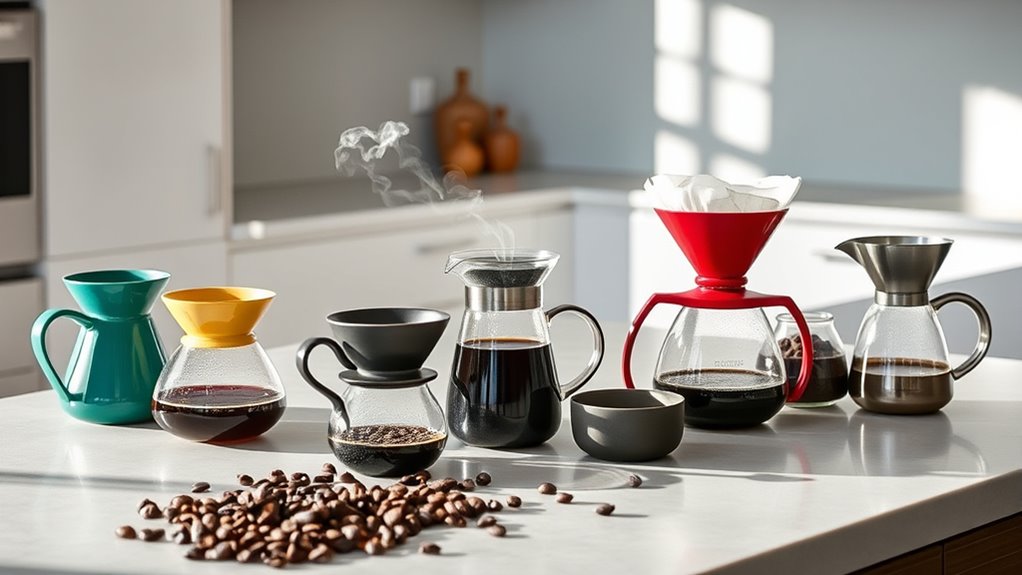
Whether you prefer the simplicity of drip coffee makers, the robust flavor from a French press, or the control offered by the pour-over technique, each method brings something unique to the table.
Let’s explore these options to help you find your ideal brewing style.
Drip Coffee Makers
Drip coffee makers are a popular choice for brewing coffee due to their simplicity and reliability. With just a few steps, you can enjoy a flavorful cup that starts your day right.
Here’s what makes them so appealing:
- Convenience: Just set it and forget it; your coffee’s brewing while you multitask.
- Consistency: Each cup tastes reliably good, ensuring you get your favorites every time.
- Batch Brewing: Brew multiple cups at once, perfect for those busy mornings.
- Affordability: They come in various price ranges, so they’re accessible for everyone.
- Customization: Adjust brew strength and flavor to match your unique taste. Many models even feature voice-controlled technology which allows you to manage your brewing process hands-free.
Additionally, many modern drip coffee makers offer smart features to enhance your brewing experience.
With a drip coffee maker, you’re just minutes away from a perfect brew. Enjoy the ease and satisfaction it brings!
French Press Technique
If you’re looking to elevate your coffee brewing game, the French press is a fantastic option to contemplate. This method enhances flavor extraction, giving you a rich and bold cup.
Start by coarsely grinding your coffee beans—about one ounce per 15 ounces of water works well. Boil your water and let it cool for about 30 seconds; you want it just off the boil.
Add your ground coffee to the French press, then pour in the hot water, making sure all the grounds are saturated. Let it steep for four minutes before pressing down the plunger slowly.
Once it’s fully pressed, pour and enjoy! Cleanup is easy, too—just separate the grounds and rinse the press. Choosing the right tools can significantly improve your brewing experience, so consider investing in a high-quality French press to get the most out of your coffee. Perfect coffee awaits!
Pour-Over Method
How can you achieve a beautifully balanced cup of coffee? The pour-over method is your ticket to perfection. This process allows for precise control over brewing, enhancing your coffee’s flavor profile.
You’ll love the ritual of pouring water in circular motions, watching the coffee bloom. Here’s what you’ll need to guarantee a delightful experience:
- Freshly ground coffee for rich aroma
- Filtered water at the right temperature to release flavors
- A scale for precision in measurement
- A gooseneck kettle for controlled pouring
- A quality dripper for even extraction
With practice, each cup you brew will resonate with warmth and satisfaction, bringing that coffee-shop feel home.
Enjoy your moments of coffee bliss!
Mastering the Perfect Coffee-to-Water Ratio
Understanding the right coffee-to-water ratio is essential for brewing a tasty cup of coffee, since it directly influences the brew’s strength and flavor profile. A common starting point is to use a ratio of 1:15, which means for every gram of coffee, you’ll use 15 grams of water. However, you can adjust this based on your taste preferences. Here’s a quick reference table to guide you:
| Coffee (g) | Water (g) | Ratio |
|---|---|---|
| 10 | 150 | 1:15 |
| 15 | 225 | 1:15 |
| 20 | 300 | 1:15 |
Experiment with these ratios to find what suits your palate best. The ideal cup awaits!
The Brewing Process: Step-by-Step
Brewing a perfect cup of coffee is both an art and a science, requiring attention to detail at every step of the process.
Follow these steps to guarantee you create a enchanting experience:
- Start with fresh, high-quality coffee beans; the aroma alone sparks joy.
- Use the right temperature water—between 195°F and 205°F— to release all those rich flavors.
- Measure your coffee and water accurately; precision makes all the difference.
- Brew for the appropriate time; too short, and it’s weak; too long, and it’s bitter.
- Finish with a gentle swirl in the pot, letting the flavors blend seamlessly.
Enhancing Flavor With Additions
While coffee alone can deliver a delightful experience, adding a few ingredients can take your cup to new heights.
Consider spices like cinnamon or nutmeg for warmth and depth. A pinch can elevate the flavor without overwhelming your brew.
If you prefer a sweeter taste, natural sweeteners like honey or maple syrup can enhance the coffee’s natural notes.
For those who enjoy a creamier consistency, try adding frothed milk, a splash of cream, or non-dairy alternatives like oat or almond milk.
Experimenting with flavored syrups can also add a unique twist; just be mindful of the amount.
Finally, don’t shy away from a dash of vanilla extract or cocoa powder to create an indulgent, personalized touch that compliments your favorite coffee blend. Additionally, using a mug with double-walled insulation can help maintain optimal beverage temperature, ensuring your drink stays hot longer.
Cleaning and Maintaining Your Equipment
Keeping your coffee equipment clean is essential for brewing great coffee every time. The love you put into your brew starts with clean tools.
To brew great coffee, start with clean tools; your love for the process shows in every cup.
When you maintain your equipment, you’ll enjoy consistently delicious coffee. Here are some simple steps to keep it in top shape:
- Rinse your coffee maker with water after each use to prevent buildup.
- Descale your machine every few months to keep it running efficiently.
- Wash your grinder to avoid stale flavors from old coffee grounds.
- Store your beans in an airtight container to preserve freshness.
- Wipe down surfaces regularly to eliminate dust and residues.
Questions
How Can I Tell if My Coffee Beans Are Stale?
Ever noticed a lackluster cup? If your coffee beans smell flat or taste bland, they’re likely stale. Look for an oily sheen or faded aroma; freshness is key to that rich, vibrant flavor you love.
What Is the Best Way to Store Coffee Beans?
To store coffee beans, keep ’em in an airtight container, away from light, heat, and moisture. A dark, cool place like a pantry works best. Don’t freeze them; it can affect flavor over time.
Can I Reuse Coffee Grounds for Brewing?
You can reuse coffee grounds, but the flavor’s likely to be weaker. If you enjoy a milder taste, it’s fine, but for ideal freshness and richness, it’s best to use fresh grounds each time.
How Does Coffee Brewing Time Affect Flavor?
Like a symphony where timing’s key, coffee brewing time markedly impacts flavor. If you brew too short, it can taste weak; too long, and bitterness reigns. Finding that sweet spot’s essential for a delightful cup.
What’s the Ideal Brewing Temperature for Cold Brew?
The ideal brewing temperature for cold brew’s around 60 to 70 degrees Fahrenheit. It allows the coffee to extract flavors slowly, resulting in a smooth, less acidic beverage. Experimenting can help you find your perfect balance!