Cold Brew at Home: Tools and Tips

To make cold brew at home, you’ll need essential tools like a large jar for brewing, an airtight container for storage, and a coarse coffee grinder. Choose quality beans, preferably coarsely ground Arabica, for a smoother taste. Steep the grounds in cold water for 12-24 hours, experimenting with ratios to suit your preference. Once brewed, store it in the fridge and serve it over ice. Stick around to discover tips for enhancing flavors and troubleshooting common issues.
Key Takeaways
- Use coarsely ground Arabica beans for a smoother cold brew with less bitterness and nuanced flavors.
- Brew in a large jar or pitcher, steeping for 12-24 hours using cold water for optimal extraction.
- Filter the mixture with a mesh strainer or fine cheesecloth to eliminate grounds and sediment.
- Store cold brew concentrate in an airtight container in the refrigerator for up to two weeks.
- Adjust the coffee-to-water ratio to your taste and serve over ice with milk or flavorings, enhancing your brew’s profile.
Essential Tools for Cold Brew Preparation
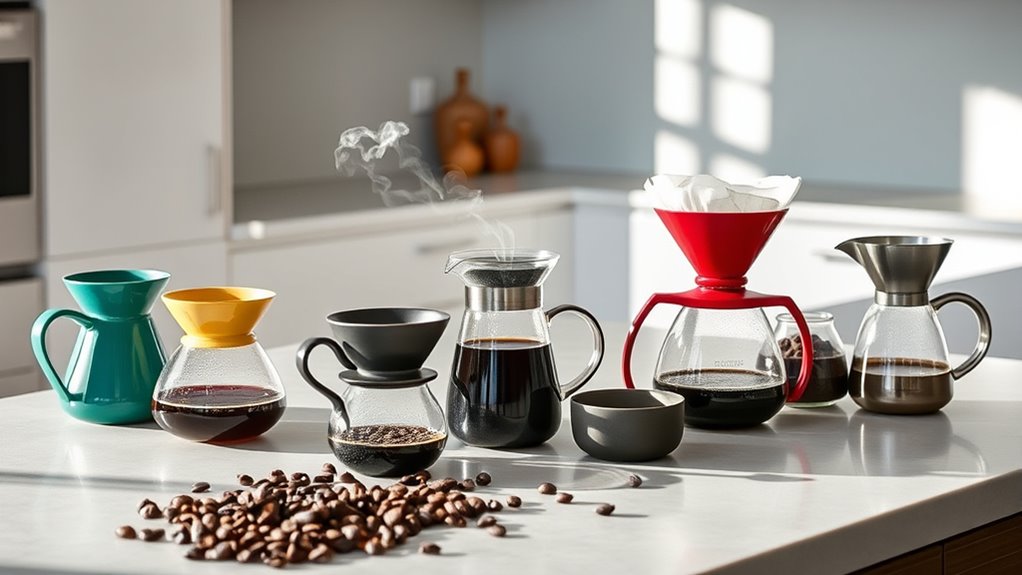
To make cold brew at home, you’ll need just a few essential tools to get started. First, grab a large jar or pitcher for brewing your coffee.
A mesh strainer or a fine cheesecloth will also come in handy to filter out the grounds once the brew is steeped. You’ll want a scale to measure your coffee and water accurately, ensuring that you get that perfect balance.
A stirring spoon is useful for mixing everything together, while an airtight container helps store your cold brew in the fridge.
Finally, having a good quality grinder is key if you’re using whole beans, so your coffee extracts properly. With these tools, you’re all set to enjoy revitalizing cold brew!
Choosing the Right Coffee Beans
When it comes to creating the perfect cold brew, picking the right coffee beans is essential.
You’ll want to contemplate the type of beans, their flavor profiles, and how the roast level affects the final taste. Choosing wisely will elevate your cold brew experience considerably.
Bean Types Overview
Choosing the right coffee beans can truly elevate your cold brew experience, as the type of bean directly influences flavor, aroma, and overall enjoyment.
When making your selection, consider the two primary varieties: Arabica and Robusta. Arabica beans are known for their sweeter, more delicate taste, while Robusta offers a bolder, earthy flavor with higher caffeine content.
For cold brew, many prefer coarsely ground Arabica due to its smooth profile and less bitterness. You might also explore single-origin beans for unique nuances from specific regions.
Experimenting with blends can give you a balanced cup that suits your palate. Ultimately, the best beans are the ones you enjoy most, so don’t hesitate to try different types until you find your perfect match!
Flavor Profile Considerations
Understanding the flavor profile of different coffee beans can greatly enhance your cold brew experience. When choosing beans, you’ll want to take into account their origin.
Beans from Latin America often bring bright acidity and fruity notes, while African beans can offer berry or floral characteristics. If you’re after a smoother, chocolatey flavor, look to beans from Central or South America.
Don’t forget about the processing methods, too; washed beans typically have a cleaner profile, while natural-processed beans can introduce deeper, fruity flavors.
It’s also helpful to buy whole beans and grind them just before brewing. This way, you can capture the freshest flavors, ensuring each cup is as delicious as possible.
Happy brewing!
Roast Level Effects
How does roast level impact the flavor of your cold brew?
The roast level of your coffee beans plays an essential role in determining the taste profile of your cold brew.
Light roasts tend to bring out fruity and floral notes, resulting in a bright, vibrant flavor. Medium roasts, on the other hand, offer a balanced taste, blending sweetness with subtle acidity.
If you prefer a deeper, richer flavor, dark roasts provide robust chocolate and caramel tones. However, keep in mind that overly dark beans can lead to bitterness.
Ultimately, the best choice depends on your personal preferences.
Experimenting with different roast levels can help you find the perfect balance of flavors, ensuring your cold brew is just how you like it.
The Cold Brew Brewing Process
To make the perfect cold brew, you’ll need coarse coffee grounds that allow for ideal extraction. The brewing time is also essential, as it determines the strength and flavor. Additionally, selecting the right coffee beans is crucial to enhancing your cold brew experience. Let’s explore how these factors come together to create your revitalizing drink.
Coarse Coffee Grounds
Coarse coffee grounds are essential for brewing a smooth and flavorful cold brew. When you use coarsely ground coffee, you allow the water to extract the rich flavors over an extended period without over-extracting bitterness.
Aim for a texture similar to breadcrumbs; this size guarantees ideal extraction while preventing a gritty final product. If your coffee is too fine, you may end up with a cloudy brew and unpleasant flavors.
It’s best to buy whole beans and grind them yourself for the freshest taste. If you’re unsure about your grind’s coarseness, a burr grinder provides the most consistency.
With the right consistency in your coffee grounds, you’ll enhance your cold brew experience, making each sip delightful and invigorating.
Brewing Time Essentials
Brewing time plays a crucial role in achieving the perfect cold brew. You’ll want to steep your coffee grounds in cold water for at least 12 to 24 hours, depending on your taste preference. The longer you steep, the stronger your brew will be. Don’t rush this process; patience is key to a smooth, rich flavor.
Here’s a quick guide to help you decide:
| Steeping Time | Flavor Strength | Ideal Use |
|---|---|---|
| 12 hours | Mild | Afternoon drink |
| 16 hours | Balanced | Everyday coffee |
| 24 hours | Bold | Cold brew cocktails |
Play around with these times to find your perfect balance, and remember, it’s all about your personal taste preferences!
Flavor Customization Techniques

While many enjoy cold brew‘s naturally smooth and rich flavor, experimenting with customization can elevate your coffee experience.
Start by adjusting the coffee-to-water ratio; a stronger brew highlights different flavors. You can also explore various coffee bean origins—each brings unique notes and aromas, as different brewing methods can influence the final taste.
Try adding spices like cinnamon or nutmeg during brewing for a warm twist. If you prefer a sweet touch, sweeteners like agave or flavored syrups can enhance your drink.
Don’t forget about adding milk or cream; different types can alter the mouthfeel and flavor profile markedly.
For a revitalizing kick, consider infusing your cold brew with fruits like orange or berries. These simple tweaks let you create a cold brew that’s perfectly tailored to your taste. Additionally, regular cleaning of your coffee maker can ensure that these flavors are not affected by residue buildup, enhancing your overall brewing experience.
Storing and Serving Your Cold Brew
Once you’ve brewed your cold brew to perfection, how you store and serve it can make all the difference in maintaining its flavor and freshness.
Transfer your cold brew concentrate into an airtight glass container. Store it in the refrigerator, where it can last for up to two weeks. Airtight containers are particularly effective at preserving freshness by keeping air and moisture out.
Store your cold brew concentrate in an airtight glass container in the refrigerator for up to two weeks of freshness.
When you’re ready to serve, dilute it with water or milk to your taste; typically, a 1:1 ratio works well, but adjust based on your preference. Pour it over ice and add any desired flavorings, like vanilla or a splash of syrup.
For a fun twist, try garnishing with fresh herbs or citrus slices. Choosing the right materials for your containers, such as glass, can help maintain its quality. Enjoy your smooth, invigorating drink and impress your friends with this delightful treat!
Troubleshooting Common Cold Brew Issues

When cold brew doesn’t turn out as expected, it can be frustrating, but identifying the problem is the first step to perfecting your brew.
Here are some common issues you might encounter and how to address them:
- Weak Flavor: If your brew tastes watered down, try using coarser grounds or increasing the coffee-to-water ratio.
- Bitterness: Over-extraction can lead to bitterness, so aim for a shorter steeping time or a cooler temperature.
- Sediment: If you find coffee grounds in your drink, consider using a finer filter or straining it twice.
- Off-flavors: Stale beans can ruin your brew; always start with fresh, high-quality coffee for the best taste.
With these tips, you’ll be well on your way to mastering cold brew!
Questions
Can I Use Decaf Coffee for Cold Brew?
Absolutely, you can use decaf coffee for cold brew! Imagine sipping a smooth, rich beverage without the jitters. It’ll still offer that great flavor you love, just without the caffeine kick. Enjoy your brew!
How Long Does Cold Brew Last in the Fridge?
Cold brew typically lasts about 7 to 10 days in the fridge. Just keep it in an airtight container to maintain freshness. After that, it might start losing flavor, so enjoy it while it’s still great!
Can I Cold Brew Herbal Teas?
Absolutely, you can cold brew herbal teas! Think of it as coaxing the flavors from the leaves, allowing them to dance through the water. Just steep them in cold water for a few hours, and enjoy!
Is Cold Brew Coffee Stronger Than Regular Coffee?
Yes, cold brew coffee’s often smoother and has a higher caffeine concentration than regular coffee, but it can vary based on brewing time and ratio of coffee to water. It really depends on your personal preference!
Do I Need Special Equipment for Cold Brew?
You don’t need special equipment for cold brew; a jar and a filter work just fine. Sometimes, simplicity leads to the most satisfying results, allowing your taste buds to explore flavors in their purest forms.