Multi-Cookers Explained: Are They Worth It?

Multi-cookers bring convenience to your kitchen by combining multiple cooking methods into one appliance. You’ll find features like pressure cooking and slow cooking, which save time and reduce clutter. They simplify meal prep and clean-up, making them perfect for busy lifestyles. However, they can be bulky, and there’s a learning curve involved. If you want to know whether this versatile tool fits your cooking style, there’s more to discover about their capabilities and potential downsides.
Key Takeaways
- Multi-cookers combine multiple cooking methods, saving space and eliminating the need for various appliances.
- They increase efficiency, cooking meals significantly faster, especially through pressure cooking functions.
- With user-friendly pre-programmed settings, meal prep becomes simplified and convenient.
- The single-pot cooking approach minimizes cleanup time and reduces kitchen clutter.
- However, they may have a learning curve and could be bulky for small kitchens.
Understanding Multi-Cooker Technology
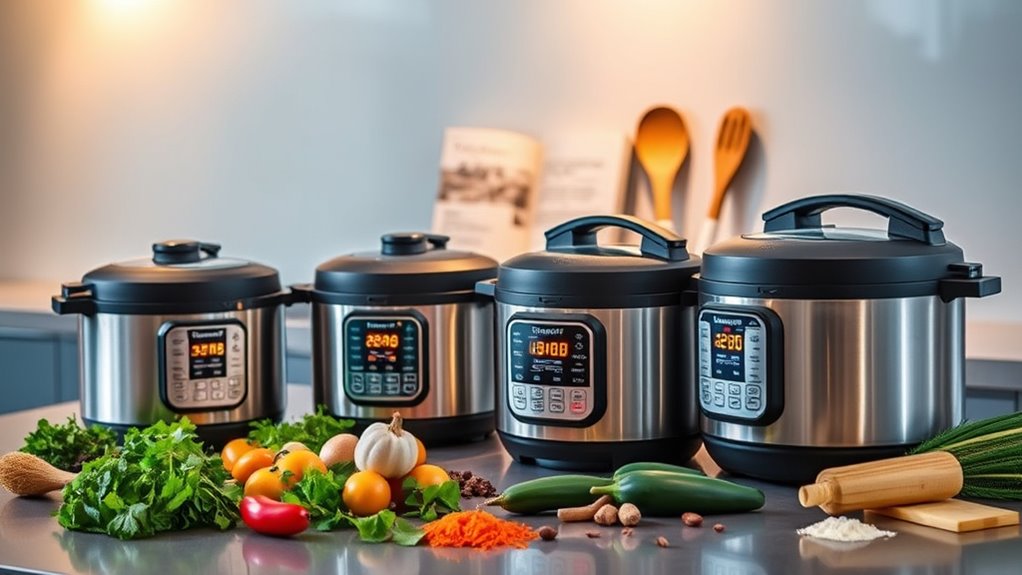
When you explore multi-cooker technology, you quickly discover how these versatile appliances combine multiple cooking methods into one device. They can pressure cook, slow cook, sauté, steam, and even make rice, all while saving valuable counter space.
This means you can tackle various recipes without needing a ton of pots and pans. You might appreciate how user-friendly they are, often featuring pre-programmed settings to simplify your cooking experience.
Plus, they cook meals quickly and efficiently, which is a lifesaver for busy schedules. With the ability to create everything from soups to stews with minimal effort, it’s clear why so many people are turning to multi-cookers as a staple in their kitchens. Additionally, their cost-effectiveness compared to separate appliances makes them an appealing choice for savvy cooks. They really do make cooking more accessible for everyone.
Key Features of Multi-Cookers
Multi-cookers come equipped with a range of key features that enhance their versatility and convenience in the kitchen.
You’ll love how these appliances can simplify meal prep, allowing you to whip up delicious dishes with minimal effort. They offer numerous cooking modes tailored to your needs, making it easy to switch things up and keep meals exciting.
- Pressure cooking for quick meals
- Slow cooking for those cozy, comforting dishes
- Steaming for healthier options
- Sautéing for building flavors effortlessly
- Rice cooking for perfect grains every time
These features not only save you time but also reduce the number of appliances cluttering your countertop.
With a multi-cooker in your kitchen, you’ll feel like a culinary magician!
Advantages of Using a Multi-Cooker
One major advantage of using a multi-cooker is its incredible efficiency in the kitchen. You’ll find that it streamlines various cooking methods into one versatile appliance, saving both time and energy. Imagine whipping up a delicious meal without multiple pots and pans cluttering your counter!
| Cooking Function | Time Saved | Cleanup Ease |
|---|---|---|
| Pressure Cooking | 70% faster | Minimal |
| Slow Cooking | All day, set it and forget it | Single pot |
| Steaming | 30% faster | Less mess |
With a multi-cooker, meal prep becomes a breeze, letting you focus on enjoying your dish instead of dreading cleanup. Plus, fewer appliances to store means more space in your kitchen!
Potential Drawbacks to Consider
Although multi-cookers offer numerous benefits, there are some potential drawbacks to contemplate before making the switch. While they can simplify cooking, you might find yourself facing learning curves and potential frustrations as you navigate the different settings and functions.
Additionally, some models can be bulky, taking up valuable counter space in small kitchens.
Here’s what you should consider:
- They can be less versatile than traditional cooking methods.
- Prepping time can still be involved, despite cooking convenience.
- Some dishes may not turn out as expected, leading to disappointment.
- They need regular cleaning and maintenance, which can be tedious.
- Depending on your budget, some high-quality options may be expensive.
Ultimately, weigh these drawbacks against the benefits before deciding.
Is a Multi-Cooker Right for You?

Considering the potential drawbacks, you might wonder if a multi-cooker is the right fit for your cooking needs.
If you’re short on time, enjoy convenience, or want to streamline your kitchen, a multi-cooker could be perfect for you. It excels at making meals quickly, whether you’re pressure cooking, slow cooking, or steaming.
For quick meals and streamlined cooking, a multi-cooker could be your ultimate kitchen companion.
However, if you love traditional cooking methods or need specific tools for particular dishes, you might find a multi-cooker limiting.
Additionally, if you cook for a large family often, the capacity might feel restrictive.
Assess your cooking habits and preferences; if you value versatility and efficiency, a multi-cooker might just become your new favorite kitchen gadget.
Ultimately, the choice depends on how you like to cook.
Questions
How Do I Clean a Multi-Cooker After Use?
To clean your multi-cooker after use, unplug it, then remove inner pot and accessories. Wash them with warm, soapy water. Wipe the exterior with a damp cloth, and guarantee everything is completely dry before storing.
Can I Use Metal Utensils in a Multi-Cooker?
No, you shouldn’t use metal utensils in a multi-cooker, as they can scratch the non-stick coating. Opt for silicone, wood, or plastic utensils to keep your appliance in great shape and extend its lifespan.
What Is the Best Size Multi-Cooker for a Family?
Think of a warm, inviting kitchen. For a family, a 6 to 8-quart multi-cooker’s your best bet. It’ll handle everything from simmering soups to crafting stews, ensuring plenty of delicious meals for everyone.
Are Multi-Cookers Energy-Efficient Compared to Traditional Cooking Methods?
Yes, multi-cookers are generally more energy-efficient than traditional cooking methods. They cook food faster and retain heat better, which means you’ll use less electricity or gas, reducing your overall energy consumption during meal preparation.
How Long Do Multi-Cookers Typically Last?
Think of them as your loyal kitchen companions; multi-cookers typically last five to seven years with proper care. However, some users find they can last even longer, turning cooking into a seamless experience.